
Understanding Button Photocells: Types, Installation, and Applications
يقدم
Button photocells are small, hard-working photo sensor devices that quietly decide when your lights should turn on and off. Instead of relying on timers or manual switches, they read natural light and act like a smart “eye” for your lamps.
In outdoor and indoor projects, button-type light photocell switches help you cut energy waste, reduce manual work, and protect fixtures from constant on/off abuse. Long-Join’s button photocell range—such as the 103 Series, JL-403C, JL-423C, and 412C—was designed exactly for this kind of practical, everyday lighting control.
What is a Button Photocell, and How Does It Work In Simple Terms?
Are you tired of walking to a switch every evening, or dealing with lights that stay on long after sunrise? A button photocell switch solves that by acting like an automatic day–night gatekeeper.
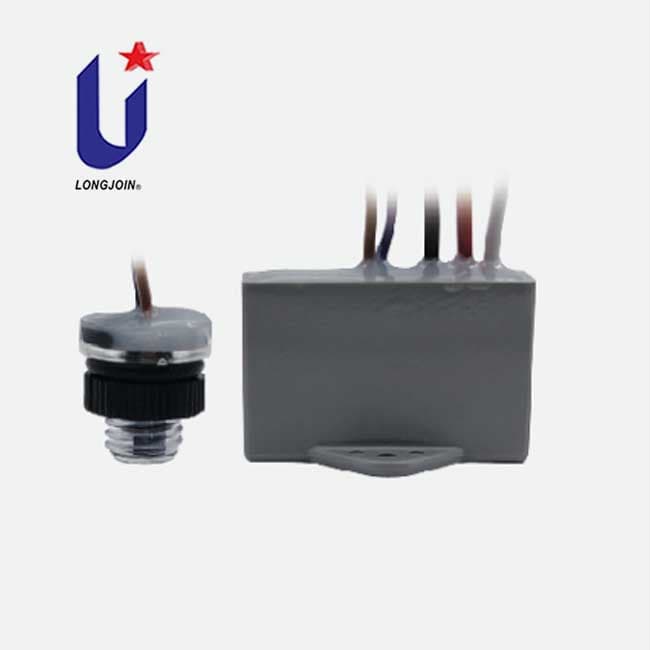
A button photocell is a compact photocell sensor built into a small threaded body. Only the “button” (the lens) is visible from the outside of the lamp or housing, while the body and wires stay inside the fixture. When ambient light reaches a set level, the photocell either closes or opens the circuit:
- At night (low lux), the photoelectric sensorturns the light ON.
- During the day (high lux), it turns the light OFF.
Long-Join describes this principle clearly in its photocell wiring guide: the controller compares natural light to a threshold and then switches the lamp off in the day and on at night, cutting labour costs and saving power.
حديث من الغسق إلى الفجر التحكم في الخلايا الضوئية use a short time delay of a few seconds. This way, passing car lights or lightning do not make the lamp flicker. Devices like the JL-403C mini button photocell use this delay to avoid false triggers. They still react fast when the sunset or sunrise comes.
Which Button Photocell Types Should You Consider for Your Project?
Looking at many part numbers and feeling lost? It helps to group them by role rather than just codes. Long-Join’s lineup covers common use cases from simple garden lights to demanding street lighting outdoor applications.

Main button photocell families at a glance
Model / Series | Typical Voltage Range | Key Strength | حالات الاستخدام النموذجية |
103 Series (e.g., JL-103A) | Usually 120 VAC | Classic, economical, easy to mount | Garden lights, wall packs, porch lights, small photocell street light retrofits |
JL-403C | 120–277 VAC | Wide voltage range, robust time delay | Courtyard lights, barn lights, area lighting, mixed-voltage projects |
JL-423C series | 120–277 VAC | Higher loading, stable performance, wide temp range | Roadway, passage, doorway and photocell led street light projects |
412C (split design) | Varies by version | Sensor separated from body for flexible mounting | Complex fixtures, tight housings, places where the sensor “eye” and wiring entry must be apart |
103 Series (e.g., JL-103A)
If you need a compact photo switch sensor for landscape or barn lights and you work mainly on 120 V, the 103 Series is a simple, proven choice. It is commonly used in street, garden, passage, and barn lighting, where installers want plug-and-forget operation with a small footprint.
JL-403C
The JL-403C mini button photocell sensor is designed for 120–277 VAC, making it ideal when you don’t want separate SKUs for different mains voltages. It also has IP54 protection. A built-in time delay, usually 3 to 10 seconds, blocks very short light spikes.
JL-423C
When loads are high and conditions are harsh, the JL-423C and its variants (423CM, 423CZ, etc.) handle strong tungsten and ballast loads from 120–277 VAC. They work in temperatures from about –40°C to +70°C. They are a choice for roadways and walkways. These doorway lights stay on all year, even in harsh weather.
412C (split design)
The 412CR style split button light sensor (sensor head and body separated) helps when the ideal sensing point is far from the wiring cavity. Think of tight LED barn lights or decorative lanterns where the “eye” must face the sky, but wiring space is off to the side.
If you want a quick overview of how button photocells fit inside the wider lighting ecosystem, Long-Join’s North American region photo control guide is a good starting point.
Why Do High-Temperature Wires and Load Ratings Matter in Harsh Environments?
In real projects, photocells live close to hot drivers and LEDs. If wiring or components are under-rated, failure is only a matter of time.
The 103 Series, for example, can be supplied with standard 105°C wire or high-temperature 150°C wire, designed for hotter fixtures and industrial devices. In many street and area lights, temperatures near the driver compartment stay high for hours, especially in tropical and subtropical regions.
Wiring and environment considerations
For large outdoor projects, combining robust button photocells with high-quality LED luminaires and good surge protection gives you a much more stable street light controller system over the long term. TE Connectivity’s data on long-life ANSI and Zhaga photocells shows how the industry is targeting tens of thousands of on/off cycles for modern photo controls.
How Should You Wire and Test a Button Photocell Switch Safely?
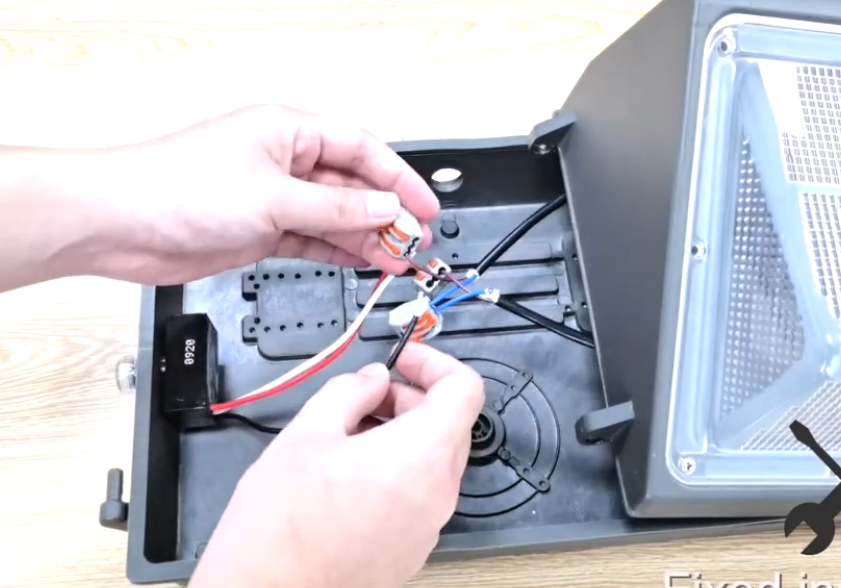
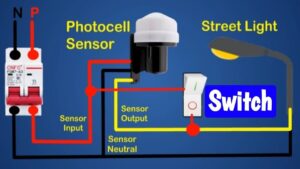
Wiring a photocell light sensor is fairly easy. But small mistakes can leave lights stuck on, make drivers buzz, or cause damage. That is why you must follow the maker’s diagram.
Typical steps include:
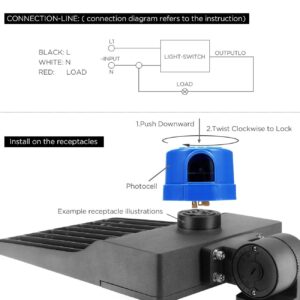
- Read the wiring diagram
Check which lead is line (L), which is load, and which is neutral (N). For 3-wire controls, neutral is required. For some simple 2-wire designs, the control sits in series with the load. - Isolate power
Turn off the supply at the breaker. Never rely on just a wall switch. - Make solid connections
Use correctly sized connectors or terminals. Avoid loose twisted joints that can heat up over time. - Respect polarity and grounding
Neutral and line must not be swapped. Grounding for the luminaire must follow local electrical codes. - Test operation
After restoring power, you can cover the photo cell sensorbriefly to simulate night and confirm the lamp turns on after the built-in delay. Then uncover to verify switch-off.
Where are Button Photocells Most Commonly Installed in Real Projects?
If you’re trying to decide whether a button photocell is appropriate for your lamp, it helps to see typical placements.
Common application examples include:
- Inside lamp posts: The button body goes inside the post, with the lens near the top to read sky light.
- Behind garden spotlights: The sensor sits on the rear or top of the fixture housing, controlling a group of spotlights.
- On one side or the top of barn lights and wall packs: Button photocells are often added as accessories for 50 W barn lights or wall pack LED lights, providing a tidy integrated dusk-to-dawn photocell sensor
- Front porch and corridor lights: Compact 103 series and similar controls are used behind decorative fixtures, keeping the lens small and unobtrusive.
To see how button photocells fit alongside twist-lock controllers, Zhaga sockets, and other smart hardware, Long-Join’s resources on LED street light with photocell and regional product families can give you real-world context. For broader LED system basics, the LEDSupply resource center is also a helpful external reference for power and driver fundamentals.
خاتمة
If you want reliable, automatic control without over-engineering the system, a well-chosen button خلية ضوئية ضوئية is one of the most cost-effective tools available. The key is to:
- Match the model (103 Series, JL-403C, JL-423C, or 412C) to your voltage, load, and environment.
- Check core parameters: voltage range, loading, lux levels, time delay, and temperature rating.
- Design the mechanical side carefully: correct G3/8A-class hole size, thread engagement, panel layout, and protective caps.
- Follow wiring diagrams strictly and test the مستشعر الضوء التلقائيbehaviour before sign-off.
With those steps in place, button photocells stop being “just a small component” and become one of the most important pieces of your intelligent lighting puzzle.
الروابط الخارجية:
●https://www.eurekamagazine.co.uk/content/technology/the-crucial-role-of-ballast-loads-in-maintaining-power-system-stability-and-preventing-operational-failures
●https://www.ledsupply.com/blog/led-lighting-resource-center/

 Arabic
  English
  Russian
  Spanish
  Portuguese
  Japanese
  Italian