

Comparative Features Of Long-Join Retail Market Wired Photocontrols
Представлять
Wired photocontrols look small, but they do a big job. They help outdoor lights switch on at dusk. They switch off again at dawn, without anyone touching a switch. For many projects, this is the simplest way to get stable lighting control. It runs on its own and stays consistent.
Длинное соединение has more than one wired option because real sites are not the same. Some places need a slow, steady response. Others need faster switching, or extra protection when power is “dirty.” The good news is simple: once you understand the two main control types and the reason for the delay time, choosing a model becomes much easier.
What Is A Wired Photocontrol, And Why Do People Still Use It?
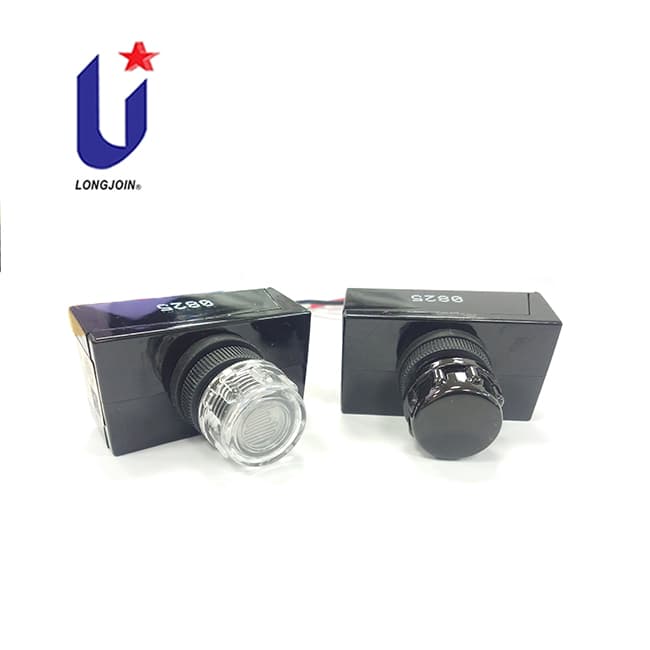
A wired photocontrol is a small controller that connects directly to your light fixture. It “reads” the outdoor brightness and decides when to turn the light on or off. That is why many people call it a photocell switch in street and area lighting jobs.
Why is it still popular today? Because it is simple, reliable, and easy to maintain. If you’re building or upgrading a site and you want “set it and forget it” dusk-to-dawn lighting, a wired photocontrol is often the fastest way to get it done. Long-Join also positions these products for common fixtures like doorway lights, walkways, and street lighting uses.

What Are The Two Main Wired Photocontrol Types?
Long-Join’s wired products in this range can be grouped into two practical “families”: thermal (bimetal style) and electronic (circuit-based). In real life, this difference shows up as response speed, switching feel, and which sites they fit best.
Thermal (Bimetal) Type: Why Does It Feel “Slow But Steady”?
Thermal units sense heat to know when to switch. They use a bimetal strip that bends as it warms up. That bending action triggers the switch. A bimetal strip bends when the temperature changes. That bend creates a small mechanical motion. This motion can open or close a contact. That mechanical movement is part of why this type usually has a longer delay.
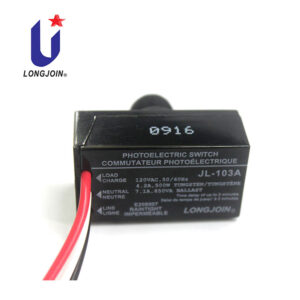
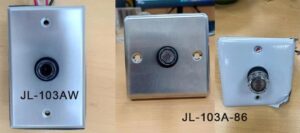
In Long-Join’s lineup, the JL-103A and JL-103AG are commonly described as wire-in button style options for automatic control of passage and doorway lighting.
Electronic Type: Why Does It Switch Faster?
Electronic units use circuits that react quickly to light changes. Many designs use light-sensing parts (like a light-dependent resistor / фоторезистор) plus electronic switching. A photoresistor changes resistance based on light level, which makes it useful for light-activated switching.
Long-Join describes the JL-423 series as a photoelectric switch for street, passage, and doorway lighting, with a short test-friendly delay that also helps avoid false triggers.
If you are building a system that needs quick response and smoother “smart-feeling” switching, electronic types are often the better fit.
Why Do Electronic And Thermal Types Have Different Delay Times?
Delay time may sound like a tiny detail. But it matters a lot. It affects how steady your lights stay at night. This matters most when car headlights flash by, lightning strikes for a moment, or shiny surfaces throw light back into the sensor.
Why Does The Electronic Type Usually Have A 5–10 Second Delay?
Electronic photocontrols can react almost instantly to a change in light. That sounds great, but instant switching can also cause nuisance on/off flicker when the light changes for just a moment.
So manufacturers add a short delay (often a few seconds) to “filter out” quick light spikes. Button-style photocells often have a built-in delay. This delay helps block quick light spikes. The JL-423 series is often listed with a 5 to 10 second delay.
Why Does The Thermal (Bimetal) Type Usually Have A 30–120 Second Delay?
Thermal designs use heat and mechanical movement. That process happens in the real world. It takes time to heat up and build, then time to cool down again. Because of that, it reacts more slowly.
A bimetal strip bends when it heats up because it is made of two different metals. Each metal expands at its own rate. That difference makes the strip curve. It does not bend right away.
That longer delay can actually help in steady outdoor settings. It ignores quick flashes of light on its own, so it won’t react to every brief flicker.
Where Do Wired Photocontrols Work Best In Real Projects?
Wired photocontrols are common in places where you want reliable dusk-to-dawn control with low complexity:
- Doorway and passage lights that should turn on every night
- Parking areas where lights need to follow ambient light changes
- photocell for street lightprojects where automatic operation is expected
Long-Join lists wire-type controllers as suitable for outdoor lighting use cases in their regional product guidance, and they also provide installation guidance for JL-103 series photocontrol sensors, which signal how common this setup is for field work.
If you want a simple “always ready” system without a control network, a wired dusk to dawn photocell setup is often the cleanest choice.
How Do JL-103A, JL-103AG, And JL-423 Variants Compare?
This is the part most buyers actually care about: what changes from model to model, and what those changes mean on site.
Long-Join’s product pages and category listings describe the wire-in controller family and call out key differences like high-temperature wiring and model variants.
Comparison Table: Quick Model Fit Check
Параметр | JL-103A | JL-103AG | JL-423C | JL-423CZ | JL-423CM |
Control type | Thermal (bimetal) | Thermal (bimetal) | Electronic | Electronic | Electronic |
Typical delay | 30–120s | 30–120s | 5–10s | 5–10s | 5–10s |
“What it feels like” | Slow, stable switching | Slow, stable switching | Fast response | Fast + smoother switching | Fast + tougher protection |
Noted wiring / build focus | Стандарт | High-temp wiring is highlighted in Long-Join wire-in lineup | Standard electronic | Zero-cross focus is referenced in Long-Join wire-in lineup | Surge protection is referenced for JL-423 family variants |
Best-fit use | Basic dusk/dawn needs | Hotter fixtures, tougher wiring needs | Общее наружное освещение | Sites needing cleaner switching behavior | Sites needing stronger protection |
Model notes used above are based on Long-Join’s wire-in controller listings and JL-103A / JL-423 series pages.
What Do “Zero-Cross” And “Surge Protection” Really Mean In Simple Terms?
These two phrases show up a lot in outdoor lighting control, but they can sound more complex than they are.
What Is Zero-Cross Switching, And Why Should You Care?
Zero-cross switching means the device tries to switch when the AC waveform is near zero voltage. This can reduce electrical noise and help avoid harsh switching moments, especially in AC control designs. Panasonic explains that zero-cross switching turns on near zero volts and can reduce noise during switching.
Long-Join also calls out “zero-cross” in its wire-in controller family listings for certain models (including the JL-423CZ naming).
Plain meaning: if your site is sensitive to flicker, unstable switching, or “rough” turn-on behavior, a zero-cross option can be worth it.
What Is Surge Protection, And What Is It Protecting You From?
Outdoor lights often deal with sudden voltage spikes. These can come from switching events, unstable power grids, or lightning activity nearby. A common protection part used in many systems is the MOV (металлооксидный варистор). MOVs are voltage-dependent resistors designed to clamp surges by changing resistance quickly when voltage spikes occur.
For Long-Join’s JL-423 family, surge-protection variants are commonly mentioned in product guidance and market listings for models like JL-423CM.
Plain meaning: surge protection helps your controller (and sometimes the connected fixture electronics) survive power spikes instead of failing early.
discusses tougher work and mentions surge protection as a key reason to step up in the series.
Заключение
If you need basic dusk-to-dawn control, start with the simplest match: thermal for slow-and-steady, electronic for quick-and-responsive. Then add protection only when your site actually needs it.
For most buyers, the smartest move is to choose the controller that matches the risk:
- If the risk is “false triggers,” focus on proper delay behavior.
- If the risk is “rough switching,” consider zero-cross.
- If the risk is “power spikes,” consider surge protection.
And if you are installing for the first time, Long-Join’s JL-103 series install guide is a useful reference point for wiring and setup habits.
Внешние ссылки:
●https://pubs.rsc.org/en/content/articlelanding/2014/cp/c4cp01591f
●https://en.wikipedia.org/wiki/Фоторезистор
●https://raeng.org.uk/media/x00btaog/9-ac-characteristics.pdf
●https://www.spire-is.com/what-is-a-metal-oxide-varistor-mov/
●https://en.wikipedia.org/wiki/Surge_protector

 Russian
  English
  Spanish
  Portuguese
  Arabic
  Japanese
  Italian