
Which Is Better: Frosted Window Or Transparent Window For Photocells?
Introduzir
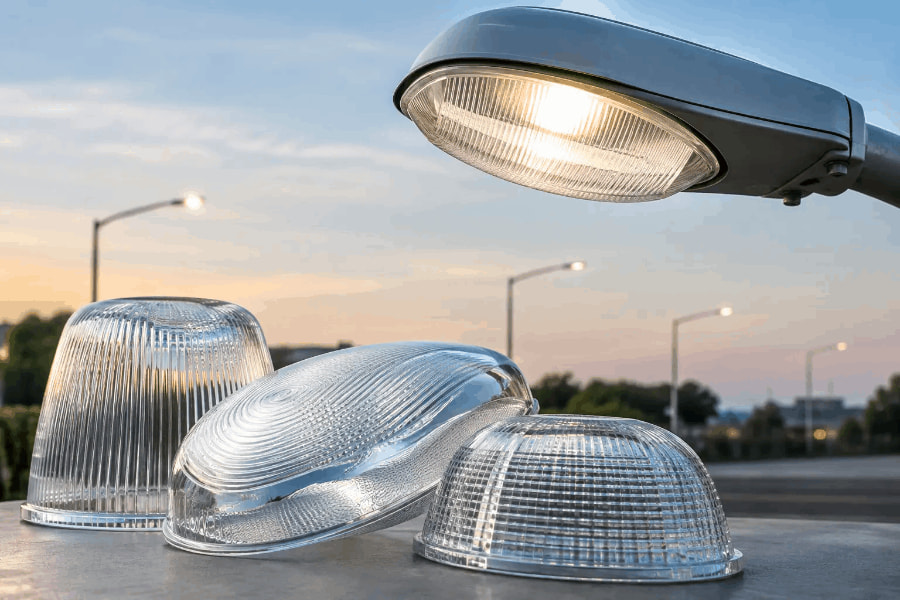
The sensing part inside a fotocélula is small, and it sits behind a piece of plastic that most buyers barely look at. Every bit of daylight it measures has to pass through that plastic first. Frosted plastic breaks the light up and spreads it before it lands on the sensor. Clear plastic lets it through more or less as it arrived.
Ask ten installers which is better and you will hear both answers. Frosted copes well on sites where the light jumps about or keeps hitting the unit from one side. Clear does better on quiet, open sites where the sensor has to follow the sky closely. The site decides it, along with how sensitive the unit needs to be.
What's the Real Difference Between Frosted and Clear?
Some people choose the window by looks. That is a mistake, because the window changes the behaviour of the unit, not only its appearance.
Shine a torch at frosted glass and the beam turns into a soft glow. The same thing happens on a frosted photocell window. Light from a headlight or a nearby lamp gets smeared across the sensor, so one bright spot carries less weight than it would otherwise.
Clear plastic does the opposite. More direct light gets to the light sensor and the unit responds faster to real changes in daylight. The price is that bad placement shows up straight away.
Recurso | Frosted Window | Transparent Window |
How light gets in | Soft, spread out | More direct |
Response | Smoother when light is uneven | Quicker and sharper |
One strong bright spot | Less effect | More effect |
Suits | Mixed or changing light | Steady, open light |
Main gain | Fewer sudden false reactions | A clearer light path |
The sensing chip is only part of the story. Research from the Lighting Research Center notes that fotossensor differ in lens, filter, shroud, field of view and response range, and each one of those shapes what the chip ends up measuring.
Why Can a Frosted Window Cut Down False Triggers?
A car turns into the road at 9 p.m. Its headlights sweep across the pole. The street light goes off, then comes back on a little later. A diffused window can help with that.
Often the unit is just reacting to the flash. A frosted window spreads that burst of light over a wider area, so the sensor de fotocélula gets a flatter, more even reading and the headlight has less pull on it.

Frosting does not solve everything. The lux level the unit switches at, its time delay and the way it faces all still count. Long-Join also tells installers not to mount photocontrols where direct sunlight shines straight into the sensing area.
Busy roads, car parks and spots where light from several fittings arrives at different angles are the usual homes for frosted units.
When Does a Transparent Window Make More Sense?
Some jobs need the photocell to pick up small, slow changes in natural light. Clear plastic suits those.
On an open site with a good view of the sky and no strong lamps or flashing signs nearby, a clear window gives a simple and predictable light path. The sensor sees close to what the sky is doing.
So a sensitive photocell for street light work, where the switching level has to be accurate, is often fitted with a clear window. Placement still matters, though. Point that window at a neighbouring lamp or a glass shopfront and the reading stops matching the real light in the area.
A clear window gives the sensor a direct view. It does not make the sensor smarter.
How Long-Join's Window and Cover Options Compare
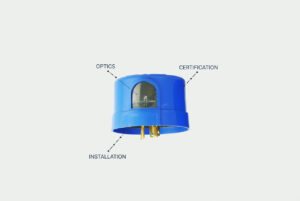
Before matching a window type to a Long-Join product, check the cover material, enclosure options, sensing type and outdoor protection.
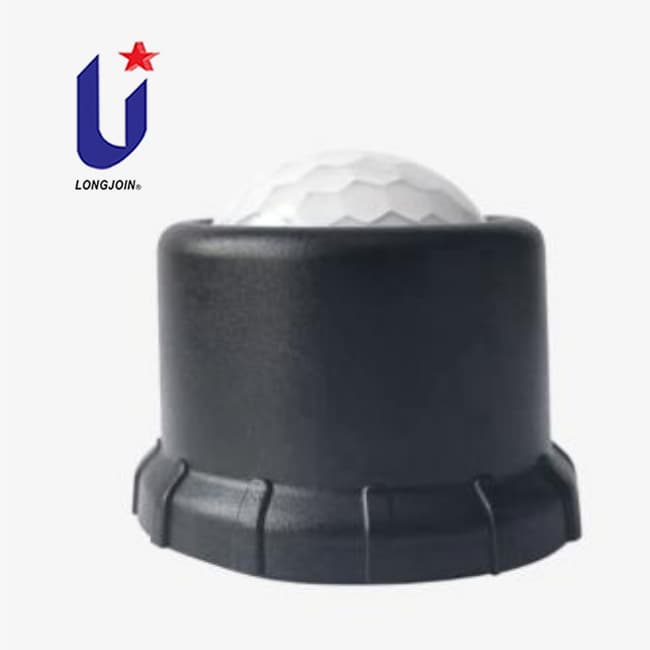
O JL-202 Series offers a clear enclosure as an option and uses a PC shell. Cover colours vary, and you can pick IP54, IP65 or IP67 protection. That makes it a good example of a transparent-cover design.
O JL-205 e JL-207 are Long-Join’s twist-lock photocontrol families. The JL-205 has a UV-resistant housing and several IP protection options. The JL-207 has PC cover options and adjustable operating levels, which helps on projects that need flexible switching. For unusual light conditions or a particular look, the cover finish can be agreed at the ordering stage.
One warning. A coloured cover is not necessarily frosted. If the project really needs a diffusing window, confirm the finish when you place the order. On a dusk to dawn photocell, the cover should also be chosen alongside the lux setting and the mounting position.
Picking One for Your Own Site
Visit the fixture in the evening if you can and watch the light around it for ten minutes.
Do cars swing their headlights across the spot? Are there floodlights, shop lights, glossy walls, glass or standing water close by? Does the photocell have open sky above it? Headlights, floodlights and several competing sources point towards frosted. If you have more than one competing source, go frosted and then test on site. An open area with steady light, or a job that needs high-sensitivity switching, points towards clear. In harsh outdoor conditions either type can work, provided the material is UV-resistant.
After installation, watch the unit over a few nights. A layout that looked right on paper may still need a small turn or a different switching delay.
Long-Join’s photocontrol installation guide also covers mounting and weather protection. A good window choice cannot rescue a photocell that is badly positioned or badly sealed.
Does the Window Material Affect Life and Stability?
Can the wrong cover shorten a photocell’s life? Outdoors, yes.
A window on a pole gets sun, rain, heat, cold, dust and the odd stone thrown at it. Weak plastic can yellow, crack or turn cloudy. Less light then reaches the sensor and the switching times start to move.
Long-Join lists polycarbonate cover options, the UV-resistant housing on the JL-205 series and several IP protection levels across its range. For outdoor photocell control, pick a window material that will handle UV and weather for years.
Cleaning matters too. Dirt on a clear window cuts light transmission. Heavy dust on a frosted window can block even more.
Perguntas frequentes
It spreads strong incoming light over a wider area of the sensor. Short, direct bursts such as headlights then have less effect on the reading.
On open, steady sites where the sensor can read ambient light without strong reflections or artificial lights nearby.
The JL-202 Series lists a clear enclosure as an option. For a frosted finish, confirm the cover with Long-Join before ordering.
Yes. UV resistance, sealing, impact strength and ageing all affect it, because the window has to stay clear for the sensing to stay stable.
Study the site first. Where strong local light sources are common, a frosted window may help. Then test the photocell switch on site before a full rollout.
Conclusão
Frosted is not always better than transparent, and the reverse is also true. Use frosted where the photocell sits among headlights, reflections, neighbouring fixtures or other patchy light. Use transparent where the light is steady and the sensor needs to follow it closely.
Choose the window together with the sensor setting, time delay and mounting position. With Long-Join products, confirm the exact enclosure and cover before ordering, especially if you need a special diffusing finish.
Links externos:
https://en.wikipedia.org/wiki/Ultraviolethttps://www.sciencedirect.com/topics/engineering/photosensorhttps://www.sciencedirect.com/topics/engineering/photocell
 Portuguese
 English
 Russian
 Spanish
 Arabic
 Japanese
 Italian