
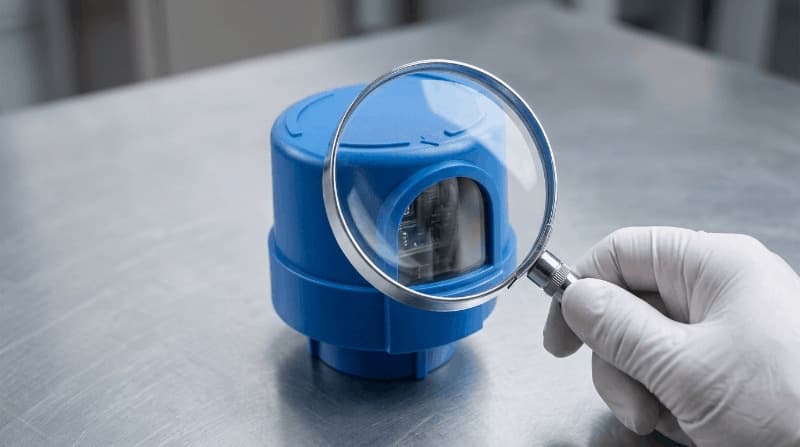
Do Photocells Need Annual Inspection?
Introduzir
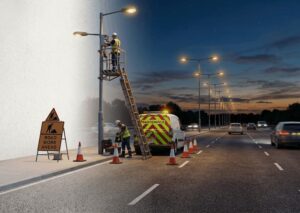
When a photocell fault occurs, the maintenance team can go on-site once it is identified and replace it. The problem is that failures can happen abruptly, and it may take time for them to be noticed and for a maintenance request to be filed.
Photocell problems develop gradually, from loss of sensitivity to oxidizing relay contacts and sealing rings losing their compression; they progress with time.
During the development of photocell faults, there are no symptoms. This is why an annual inspection is very necessary. They help catch these things before they become a major issue and reduce lamp failures to little or none.
Why Regular Inspection Actually Matters
Three common problems happen inside a photocell over time that inspection can catch before they become service failures:
- Sensing accuracy drifts
- Relay contact oxidation
- Degradation of sealing integrity
Sensing Accuracy Drifts
Aging could affect the efficiency of a photocell’s photosensitive element. As this develops, it affects the photocell’s calibration, leading to lamp switching at a higher or lower lux. This could present as light switching on before dusk, or staying on a little longer after dawn. An annual response test catches this drift before it becomes a public complaint.
Relay Contacts Oxidation
The relay contact surfaces carry current and decide whether the light is switched on or off. These contact surfaces could develop oxidation over time, which could lead to inconsistent switching time. This is more common in humid environments, and if it continues, it could progress to relay sticking, in which the relay is fixed in a closed position (leaving the lamp always on) or in an open position (leaving the light always off)
Degradation of Sealing Integrity
Gaskets and sealing rings lose their elasticity from thermal cycling and UV exposure. This doesn’t happen early but could begin to set in around five years of operation, and no longer provides the designed-in Proteção de PI. Once the seal goes, moisture enters, and the circuit failure timeline begins.
What Annual Inspection Should Cover
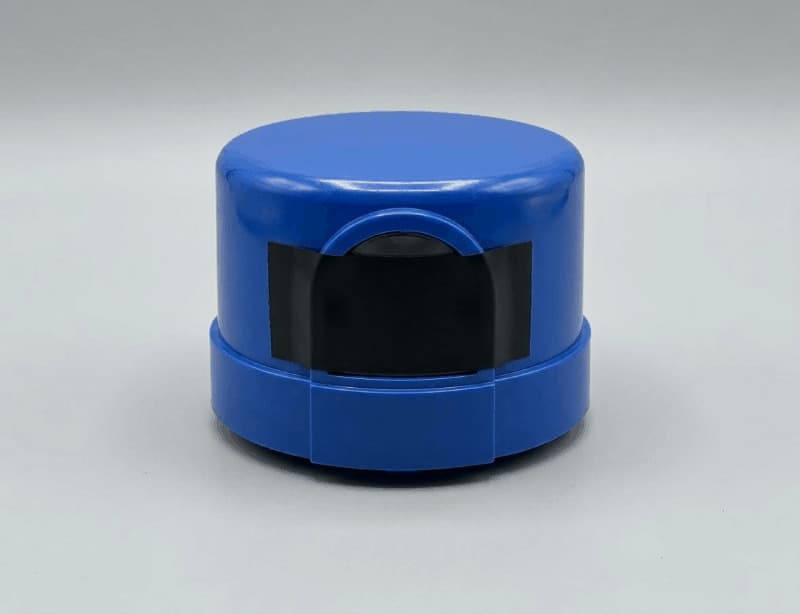
Knowing what to inspect is also very important. If an annual inspection is done the right way, it is very possible that there will be no glitch till the next inspection. The table below is a summary of the most important things to check when carrying out an annual inspection check.
Inspection Item | Purpose and Content |
Photo Sensor Sensitivity Test | Confirm accurate sensing intensity, prevent malfunction from sensor decline |
Relay and Switch Contact Check | Ensure good physical contact without oxidation or corrosion |
Shell Sealing and Environmental Protection | Check waterproof and dustproof sealing for moisture or dirt intrusion |
Functional Response Test | Simulate daylight and darkness changes to verify correct switching |
Secure Installation Check | Inspect whether installation is firm and has not loosened |
The functional response test is the most practical item on this list and the quickest one to run. Cover the sensor for 30 to 60 seconds. The lamp should switch on cleanly within the time delay. Remove the cover. The lamp should switch off cleanly. If either response is sluggish, delayed, or absent, there is a problem worth investigating further. This test takes two minutes per fixture and will catch most active failures.
Long-Join Features That Support Easier Maintenance
The reason why Long-Join is highly revered as a photocell manufacturer among maintenance teams is because the models assist in the process. Long-Join photocells have the following advantage over other models.
Maintenance Advantage | Specific Description |
High-Quality Photo Sensor and Relay Design | Slows aging and damage, extends component service life |
Convenient Standardised Interface | Quick repair and replacement, lowering technical barriers |
Smart Remote Monitoring Support | Remote inspection and basic data calibration via platform, reducing on-site burden |
Maintenance Guide Support | Thorough inspection steps and troubleshooting documentation |
Long-Join’s twist-lock photocells on NEMA receptacles make the functional response test and physical replacement both significantly faster than hard-wired alternatives. The cover test requires no tools. Replacement requires no tools. The complete inspection cycle for a twist-lock unit at a standard pole is under five minutes, including travel to the fixture.
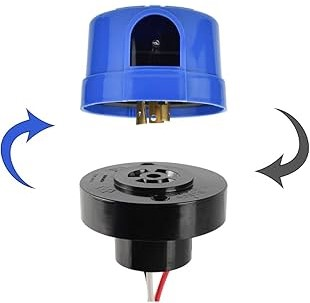
For networks with smart monitoring, remote inspection reduces the on-site requirement considerably. A platform that logs switching event timing can flag any fixture whose switching pattern has deviated from its baseline, which is a more sensitive early warning than annual physical inspection alone. But smart monitoring supplements rather than replaces physical inspection — you still need someone to check the seal and contact condition.
Frequently Asked Questions on Annual Photocell Inspection
Gradual sensing drift causes incorrect switching timing that generates public complaints. Relay contact oxidation progresses to sticking failure. Sealing degradation allows moisture ingress that causes circuit failure. All three develop slowly enough that they are invisible without inspection but show up as service failures eventually.
Sensing sensitivity response, relay contact condition, sealing ring integrity, functional switching test, and physical installation security. The functional response test is the quickest and catches most active failures.
Depending on the Long-Join model you can get features ranging from Standardised NEMA interfaces, photodiode sensing which possesses relatively slower aging to CDS, industrial-grade relay contacts, smart monitoring support on applicable models, as well as detailed maintenance documentation.
Yes. Although remote monitoring makes maintenance checks easier, having an annual physical inspection ensures that progressive damage such as sealig condition, contact integrity, and installation security can be swiftly identified.
Yes, remote monitoring and annual inspections make the perfect team for photocell protection.
Conclusão
Annual inspection helps with identifying slowly deteriorating photocell conditions before they cause a visible service failure. Long-Join’s standardised interfaces and smart monitoring work together to make the inspection process faster and more targeted, but the inspection itself remains a worthwhile part of any serious lighting maintenance programme.
Links externos
●https://en.wikipedia.org/wiki/Lux
●https://www.iec.ch/ip-ratings
 Portuguese
 English
 Russian
 Spanish
 Arabic
 Japanese
 Italian