How UV-Resistant Photocells Perform Better In High-Temperature Environments
導入
Outdoor lights in hot places have a hard job. They sit under strong sun for years. They face UV rays, high heat, sudden rain, and changing humidity.
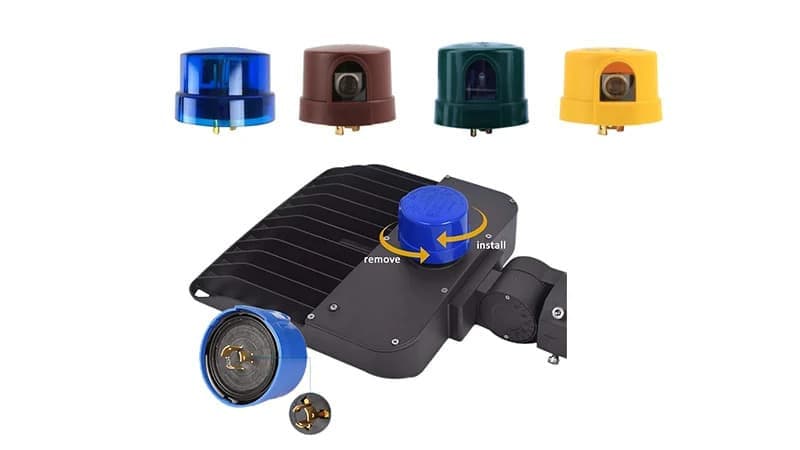
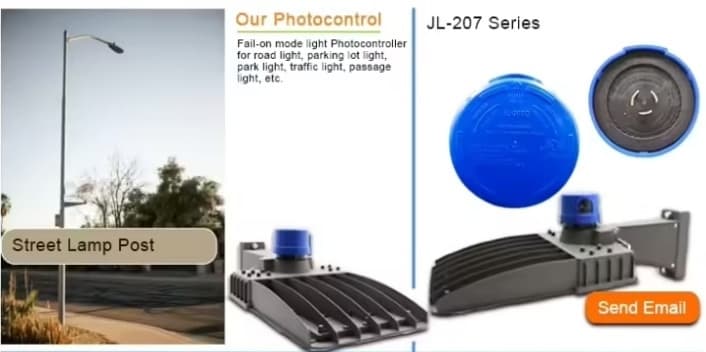
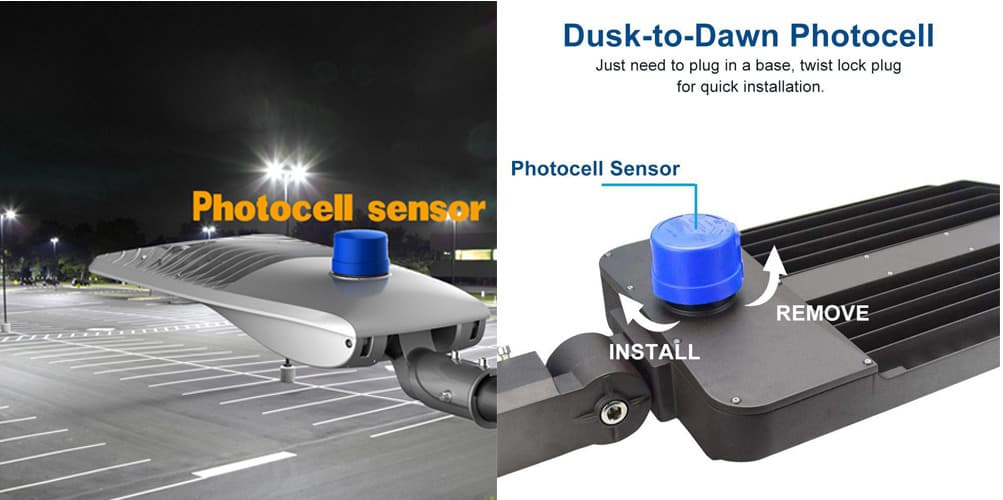
That is why UV-resistant design matters so much for reliable 屋外街路照明 projects. LONG-JOIN positions the JL-207C as an outdoor twist-lock photocontrol built for automatic dusk-to-dawn switching, with options aimed at longer life and stable operation in harsh use.
Why Does UV Resistance Matter In Outdoor Photocontrols?
A dusk-to-dawn photocell works outdoors every day. It keeps working, even when the weather is bad. It sits in direct sunlight, then cools at night, then heats up again the next day. That cycle slowly attacks normal plastic. When the housing gets weak, the whole unit becomes less dependable.
UV resistance matters because sunlight does more than change color. It can wear down polymer surfaces. It can make plastic dry and brittle. It can also make sealing parts less stable over time Once that happens, water and dust have a better chance of getting inside. Then a simple switching part can turn into a maintenance problem.
LONG-JOIN’s broader product pages repeatedly highlight anti-ultraviolet shells, waterproof design, and UV-stable materials as key features for outdoor photocontrol products, which shows how central UV protection is in this category.
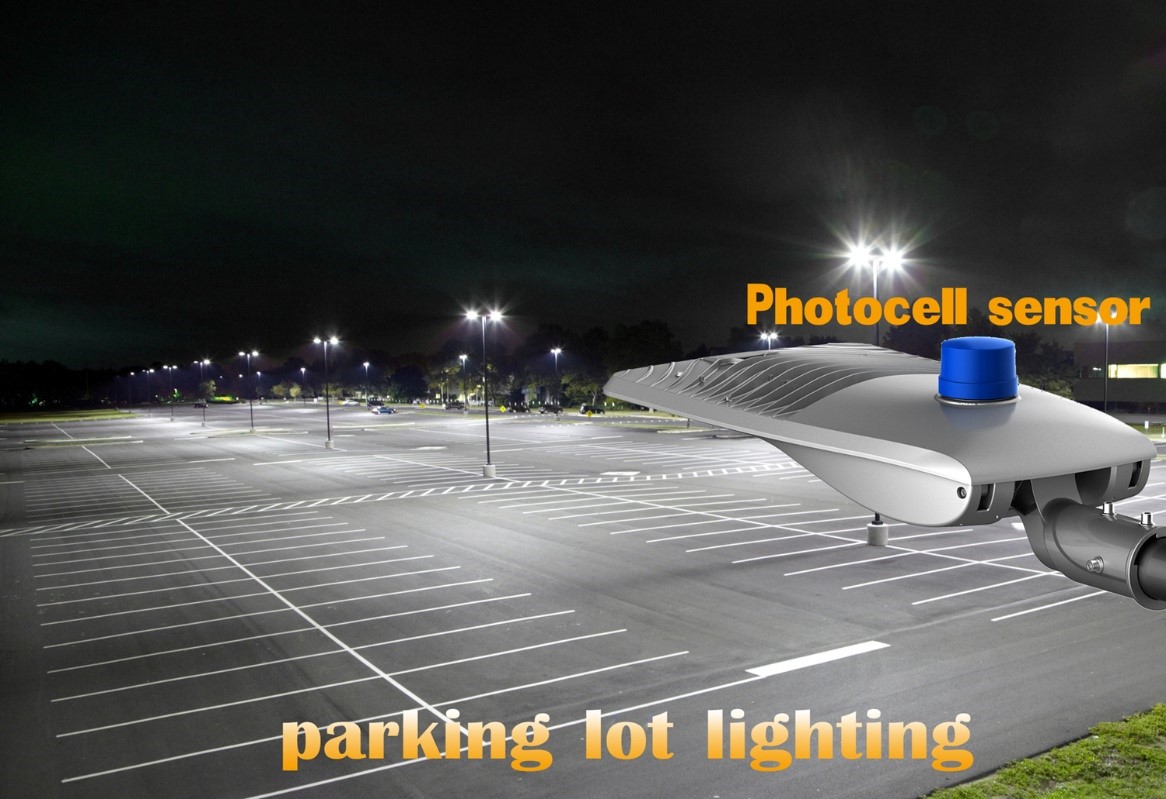
This is even more important for road lights, parking lots, industrial yards, and city projects that cannot afford repeated service calls. A photocell for street light should not just switch lights on and off. It should also survive the real outdoor environment.
What Usually Goes Wrong With Non-UV-Resistant Photocells?
Low-grade products often fail in small steps before they fail in a big way. First, the housing may fade or turn chalky. After that, the body may get brittle.
Here is a simple look at the most common problems:
よくある問題 | Main Cause | Likely Result |
Housing discoloration | UV exposure | Poor appearance and surface aging |
Plastic brittleness | Long heat and sun exposure | Cracks or breakage |
Seal failure | Thermal expansion and deformation | Water ingress |
Mechanical weakness | Material fatigue | Damage during use or service |
Internal corrosion | Moisture penetration | Switching failure |
These failures often show up faster in tropical, desert, coastal, and high-UV sites. In those places, a weak housing or poor seal does not get much rest. It is under stress almost all year.
How Is The JL-207C Built For Harsh Outdoor Conditions?
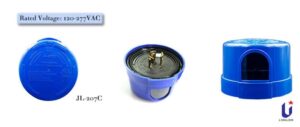
LONG-JOIN’s JL-207C is presented as a twist-lock outdoor 光電池制御 product for automatic street, garden, passage, and doorway lighting. The brand also notes long-life versions, double-layer protective shell options, and stable operating characteristics across the JL-207 family.
What makes that important in hot climates is the material strategy. Based on the product direction and related LONG-JOIN category pages, the design focus is not only on switching. It is also about keeping the housing, base, and seal stable while facing long UV and heat exposure. That is the difference between a photocontrol that works for a season and one that keeps doing the job year after year.
Why Are PC And PP Useful For Outdoor Housing Design?
For outdoor housings, the material must do two jobs at once. It has to stay strong under the sun. It also needs to hold up well as the weather changes. That is why PC and PP are often used in practical outdoor designs.
ポリカーボネート, or PC, is known for strong impact resistance and good structural strength. It helps a housing stay firm instead of turning fragile too quickly under stress. Polypropylene, or PP, is valued for its light weight, moisture resistance, and good cost balance. When used the right way, this pairing helps improve durability without making the product overly complex.
LONG-JOIN’s connector pages also mention PC body materials with UV-stable treatment in related outdoor components, which supports the brand’s wider use of UV-focused material choices in exposed lighting parts.
A simple way to think about it is this: PC helps with strength, and PP helps with practical outdoor balance. Together, they give the housing a better chance of lasting in hot sun.
Why Does The JL-207C Use A Reinforced Base Instead Of Ordinary Plastic?
The base is easy to overlook, but it does a lot of hard work. It supports the housing, holds the electrical connection area, and deals with heat from both the environment and the fixture. If the base deforms, cracks, or weakens, the whole photocell switch becomes less reliable.
Your outline points to modified PBT reinforced with glass fiber in the JL-207C base structure. That makes sense for high-temperature use because reinforced engineering plastics usually hold shape better than ordinary plastic. They also handle mechanical stress more confidently during transport, pole installation, and field replacement.
Here is a simple comparison:
Material Property | Ordinary Plastic | Modified Glass Fiber PBT |
Heat stability | より低い | Better |
Mechanical strength | Basic | より高い |
Shape stability | More likely to deform | More stable |
電気絶縁 | 様々 | Strong for outdoor use |
Service durability | 適度 | Better for long use |
How Do UV Stabilizers And Antioxidants Help The Base Last Longer?
Heat and sun do not only attack the outer shell. They also age the base material. Over time, oxidation and UV rays can weaken plastic.
That is why additives matter. UV stabilizers help slow the damage caused by sunlight. Antioxidants help lower the harm caused by heat and oxidation over time.
This matters because outdoor failure rarely comes from one big event. It often comes from slow aging. A base that resists that aging gives the light photocell a longer working life and lowers the risk of surprise failure in the field.
Why Does Sealing Quality Matter So Much In A Hot Climate?
A good outdoor control is only as good as its seal. If the seal fails, the rest of the design starts losing value fast.
In a high-temperature environment, sealing parts expand and contract again and again. If the joint between the housing and base is weak, moisture can creep in. Dust can also enter. Once that happens, corrosion may form, switching parts may become unstable, and the product may fail long before its expected service life.
Your outline notes that JL-207C uses sealing adhesive between the base and housing and aims at IP65 photocontrol protection. LONG-JOIN’s broader product pages also show that the company offers outdoor photocontrol products with waterproof design and IP-rated options, including IP54, IP65, and IP66 on related families.
That is why sealing is not a small detail. It is part of the core design.
How Does JL-207C Compare With A Standard Outdoor Photocell?
The difference becomes easier to see in one table:
特徴 | 標準光電セル | LONG-JOIN JL-207C Style Design |
Housing material | Ordinary plastic | UV-focused engineering material approach |
UV resistance | 限定 | Enhanced |
Base material | Standard plastic | Reinforced engineering base |
Aging protection | Often minimal | Additives such as UV stabilizers and antioxidants |
Seal design | Basic | Reinforced outdoor sealing approach |
Heat durability | 適度 | Better suited for hot environments |
Service life | Shorter in harsh sun | Longer-term outdoor reliability focus |
What Should Buyers Check Before Choosing A Photocell For Hot Outdoor Projects?
For hot climate work, buyers should ask simple but important questions. Is the housing UV-resistant? Is the base an engineering-grade material? Is the seal built for real outdoor use? Does the product have an IP-rated protection target? Is the structure strong enough for transport and installation?
A quick checklist helps:
Evaluation Item | What To Look For |
UV-resistant housing | 必須 |
High-temperature material | Engineering-grade |
防水シーリング | IP65 or better where needed |
Oxidation resistance | Important |
Mechanical durability | Reinforced base preferred |
Long switching life | Required for road lighting |
These checks are practical, easy to understand, and useful for any buyer who wants fewer field failures.
結論
In hot outdoor spaces, UV resistance is not just a nice extra. It is a basic need. Strong sun, heat, and damp air can wear out ordinary controls fast. A well-built unit lasts longer. Its housing, base, and sealing system are made for that harsh setting.
LONG-JOIN’s JL-207C stands out because it combines UV-focused housing design, a reinforced base concept, aging-resistant additives, and a sealing structure aimed at dependable outdoor use. For roadways, parking areas, industrial sites, and other exposed projects, that kind of design gives a 光電セルセンサー a better chance to keep working the way it should.
外部リンク:
●https://en.wikipedia.org/wiki/Polycarbonate
●https://ja.wikipedia.org/wiki/ポリプロピレン
●https://www.uninko-plastics.com/cp/pbt-compounds.html
●https://www.sciencedirect.com/topics/chemistry/ultraviolet-stabilizing-agent