
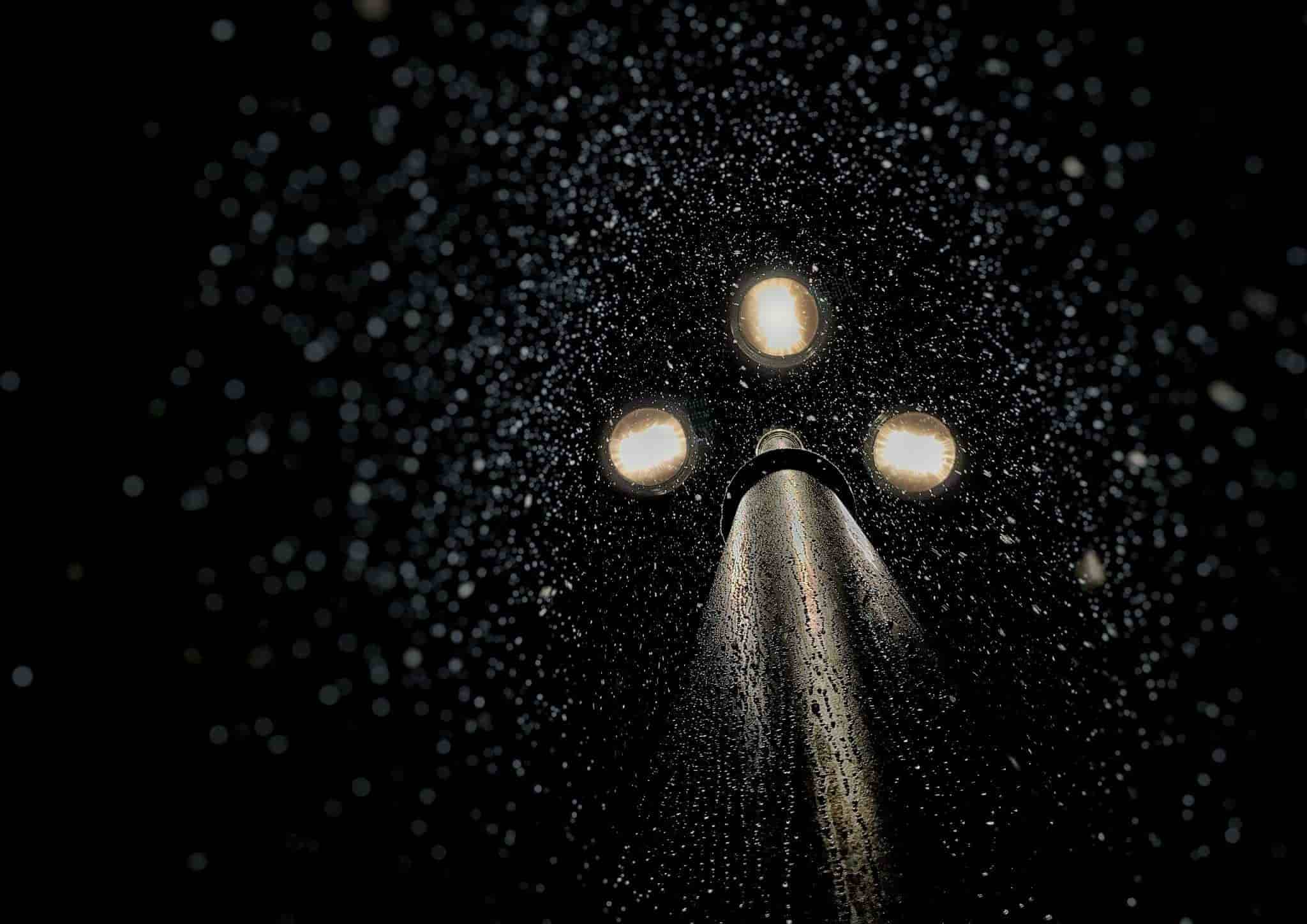
8 Factors Favoring All-Weather Constant-On Lighting Solutions over Motion-Activated Lighting
導入
Lighting control is always a trade-off between energy savings and safety. Motion sensors save energy during unoccupied hours. But in many real-world applications, interrupted lighting creates more problems than it solves.
Constant-on photo control keeps lights running from dusk to dawn, without cycling, without false triggers, and without the maintenance complexity that motion sensing introduces.
This article discusses eight factors that show when constant-on is the right call when looking at light solutions.
Should Photo Controls Always Stay On?
A photo control switches on at dusk and off at dawn. Constant-on means no dimming, no motion-based interruption, and no dark periods during the night.
This is not an energy-wasting approach by default. In the right application, constant-on reduces total system cost:
- Fewer relay cycles means longer relay life
- No motion sensor means fewer components to fail
- No false triggers means no complaints and no unnecessary maintenance visits
The constant-on decision comes down to one question: is continuous nighttime safety more important than demand-based energy saving in this specific location?
Eight Scenarios More Suitable for Nighttime Constant-On Photo Control Solutions
When it comes to picking out scenarios where constant-on is more suitable, one needs to put certain things into consideration:
- Will there be safety risks if the light is off/dim at a certain time?
- Is the environment exposed to frequent motion triggers?
- Is the fixture location or type an inconvenience to constant maintenance checks?
If one or multiple of these questions are answered yes, then more likely than not constant-on is appropriate for the lighting source.
Eight application types consistently demonstrate that constant-on photo control outperforms motion-activated alternatives on reliability, safety, and total cost.
No. | アプリケーションシナリオ | Reason and Explanation |
2.1 | Roadway Lighting | Continuous lighting ensures nighttime driving and pedestrian safety, effectively preventing accidents in darkness |
2.2 | High-Mast Lighting (8-12 metres) | Motion sensors are less sensitive at high poles; wind, rain, and snow cause frequent on/off cycling — constant-on is more stable |
2.3 | Harsh Weather Regions | Motion sensors are prone to false triggers from wind, fog, dust, rain, and temperature/humidity variations |
2.4 | Compliance with Urban Lighting Regulations | Regulations require roads to be fully lit throughout the night, forbidding dark zones |
2.5 | Smart City Lighting | Constant-on schemes align with system stability, consistency, and low maintenance requirements |
2.6 | Large-Scale Lighting Maintenance | Constant-on photo control simplifies maintenance, reducing complex adjustments, false operations, and resource input |
2.7 | Composite Sensor Replacement | Composite sensors are sensitive and easily cause false triggers; simple, robust constant-on photo control is more effective |
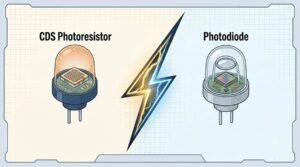
2.8 | Electronic Photo Control for Harsh Environments | Photodiode-based electronic controls reduce false triggers, achieving stable and durable illumination |
High-mast lighting deserves specific attention. At 8 to 12 metres, a Passive Infrared Sensor can barely detect a pedestrian walking directly underneath it. Wind-blown debris, rain, and insects all trigger false activations at that height.
The maintenance crew needed to address a stuck-on or stuck-off high-mast fixture costs far more than the energy saved by motion control. Constant-on photo control eliminates that entire failure mode.
Smart city lighting is the other area where constant-on wins on system grounds. A smart city management platform monitoring thousands of fixtures needs predictable behaviour.
A photocell that switches on at a defined lux level every evening and off at a defined lux level every morning generates no unexpected alerts. However, a motion-activated system in the same network generates dozens of cycling events per night that require investigation.

Frequently Asked Questions
When continuous lighting is required for safety, regulatory compliance, or system consistency. Roadways, high-mast poles, harsh weather regions, and smart city networks all benefit from constant-on over the cycling and false-trigger risk of motion sensing.
At 8 to 12 metres mounting height, PIR sensors have significantly reduced detection sensitivity. Wind, rain, and environmental movement cause frequent false triggers. The maintenance cost of servicing a high-mast fixture far exceeds any energy saving from demand-based control.
Rain, fog, dust, strong wind, snow, and temperature extremes all cause false triggers in PIR motion sensors. High humidity accelerates component degradation. Constant-on photo control avoids all of these because it only responds to ambient lux, not to movement.
Smart city platforms need predictable, consistent fixture behaviour for accurate monitoring and fault detection. Constant-on photo control provides switching at defined lux thresholds every day. Motion-activated systems generate variable switching events that trigger unnecessary platform alerts and investigation workflows.
Long-Join's fixed lux, constant-on photo controls use a single standard across a network — one spare part, one maintenance procedure, one fault diagnosis process. The twist-lock format allows replacement in under a minute without rewiring. Combined with IP65 or IP67 protection and surge arrester design, maintenance intervals are longer, and fault rates are lower than motion-activated alternatives.
結論
Constant-on photo control is not a failure to optimise; rather, it is the right optimization for applications where continuous nighttime lighting is the primary requirement.
They remain essential in scenarios such as roadway safety, high-mast sensitivity limitations, harsh weather reliability, regulatory compliance, smart city consistency, simplified maintenance, composite sensor replacement, and harsh environment durability.
Their application all point to the same conclusion: in these eight scenarios, a reliable photo control that stays on all night outperforms a motion sensor that introduces complexity, false triggers, and maintenance cost.

 Japanese
  English
  Russian
  Spanish
  Portuguese
  Arabic
  Italian