
UM Series Photocontrol Products Market Pricing Strategy And Regional Penetration Plan
يقدم
In 2026, more buyers now need reliable, low-cost photocell solutions across fast-growing emerging markets. Outdoor lighting budgets are tight. But cities and utilities still need safe roads, long-lasting products, and low maintenance costs today. Global outdoor lighting and outdoor LED lighting markets are both projected to grow steadily to 2032–2033, driven by energy-efficient street lighting and smart city projects.
The UM Series from Long-Join is designed exactly for this space: stable performance, flexible certifications, and sharp pricing for photocell street light projects in regions where every dollar counts. In this article, we look at how to position UM models, set prices, and choose the right markets so distributors and شركات تصنيع المعدات الأصلية can build a healthy margin instead of racing to the bottom.
What Makes The UM Series A Strategic Product For Emerging Markets?
Many customers in Africa, Southeast Asia, and South America face the same problem. Power is unreliable, the air is humid, and budgets are tight. They still want مستشعر الخلية الضوئية products that keep lights on at night and off in the day, without constant truck rolls.
The UM Series responds in three practical ways:
- It supports wide voltage ranges and strong IP ratings. It stays reliable on weak grids and in storms.
- Flexible certifications give you enough safety and legal cover to pass local checks. You avoid paying for every top mark.
- Clear positioning as a value line that sits below the flagship JL series but keeps the core quality of a specialist lighting control
You can think of UM as the “workhorse” photocontrol: not the most luxurious, but tough, dependable, and easy to explain to municipal buyers.
UM Series Focus In Key Regions
منطقة | Typical Needs | How UM Series Fits |
أفريقيا | Low budgets, unstable grid, long replacement cycles | Robust IP, cost-effective builds, simple specs to approve |
Southeast Asia | Fast upgrades, mix of basic and smart projects | Bridge between entry-level and smart controllers |
South America | Large street networks, public tenders, price pressure | Competitive pricing with enough features to win tenders |
Europe & Russia | Selected mid-tier projects, retrofit, trial deployments | UM-208 / UM-240 used where top-tier certification is not required |
For buyers who want a reliable dusk to dawn photocell without overpaying for features they will never use, the UM family becomes a natural shortlist choice.
How Does The UM Series Compare To The JL Series In Real Projects?
When a distributor asks “UM or JL?”, the answer is usually not technical first. It is: “Which risk matters more here—budget, load, or compliance?”
JL-205C vs UM-205C: Which Works Better For Price-Sensitive Networks?
UM-205C is a budget-friendly photocell control for street and area lighting. It fits tight budgets and moderate, everyday load needs quite well. JL-205C focuses on higher load capacity and broader application scenarios at a higher price point.
In practice:
- Choose UM-205C when the customer wants acceptable switching performance, reasonable IP rating, and a stable sensor at the lowest possible system cost.
- Choose JL-205C when fixtures drive higher wattage, or where a city wants one “universal” part number for many different poles and roads.
JL-208 vs UM-208: How Important Are Certifications?
JL-208 is typically used when stricter standards or more complex projects are involved. يو إم-208 keeps similar basic structure and function but relaxes some certification and configuration requirements so the unit can be sold at a lower price.
UM-208 is a good choice for OEMs in Southeast Asia or South America who need an ultra-thin cap or shorting solution at scale. It works well for teams who do not need every advanced test or label in North America.
JL-204C vs UM-204C: How Much Load Do You Really Need?
JL-204C handles higher loads and meets stricter performance demands. UM-204C gives up some load capacity for a simpler, leaner overall design.
Cities using mid-power LED streetlights can use UM-204C. This works when there is no UL rule. For heavy wattage, complex dimming, or utility-grade projects, JL-204C stays the safer recommendation.
JL-240 vs UM-240: Certification First Or Price First?
For projects close to EU or North American standards, the buyer may prefer JL-240, with higher certification density and premium positioning. UM-240 keeps the same application idea but shifts the conversation towards “good enough plus better price.”
UM-240 is ideal when:
- The tender focuses more on price than on full Tier-1 certifications.
- The customer wants a solid light photocellthat meets essential safety and IP needs but must stay within a strict budget.

JL vs UM Series Positioning (Simplified)
Pair | JL Series Focus | UM Series Focus |
205 درجة مئوية | Higher load, broader use, more premium | Cost control, mainstream street and area projects |
208 | Stricter standards, complex projects | Similar function with leaner certification package |
204C | Higher power, high-standard markets | Lower load, emerging markets without UL |
240 | More certifications, premium pricing | Cost advantage in mid-standard regions |
Which UM Models Fit Different Regions And Application Scenarios?
Distributors often ask one simple question: “If I only stock three or four SKUs, which UM models should I choose for each region?”
How Do UM-205C And UM-204C Fit Cost-Driven Markets?
In many cities across Africa and parts of South America, the main purchasing driver is still upfront cost. UM-205C and UM-204C sit at the center of this strategy:
- They offer reliable switching and wide voltage options. Their IP54–IP67 rating suits dusty, rainy, coastal climates well.
- They help local partners replace no-name photo cellproducts that fail early and damage trust.
For tenders that compare dozens of suppliers, the UM line offers a clear “value vs risk” explanation: buyers spend slightly more than the very cheapest option but get better consistency and fewer call-outs.
Where Do UM-240 And UM-208 Add Extra Value?
UM-240 and UM-208 work best in markets that are growing fast. These markets are still below the strict Tier-1 level:
- Parts of Southeast Asia are growing fast. Industrial parks and smart campuses want better parts but still protect CAPEX.
- Selected Europe and Russia projects where mid-tier fixtures and pilot smart city zone
Regional Matching For UM Series Models
Region / Market Type | Recommended UM Models | حالات الاستخدام النموذجية |
Africa – secondary cities, highways | UM-205C, UM-204C | Basic street lighting, road tunnels, rural roads |
South America – municipal tenders | UM-205C, UM-240 | City streets, parks, industrial zones |
Southeast Asia – industrial & smart parks | UM-205C, UM-208, UM-240 | Campuses, factories, tech parks, pilot smart corridors |
Europe / Russia – mid-tier projects | UM-208, UM-240 | Retrofit LED poles, private industrial estates |
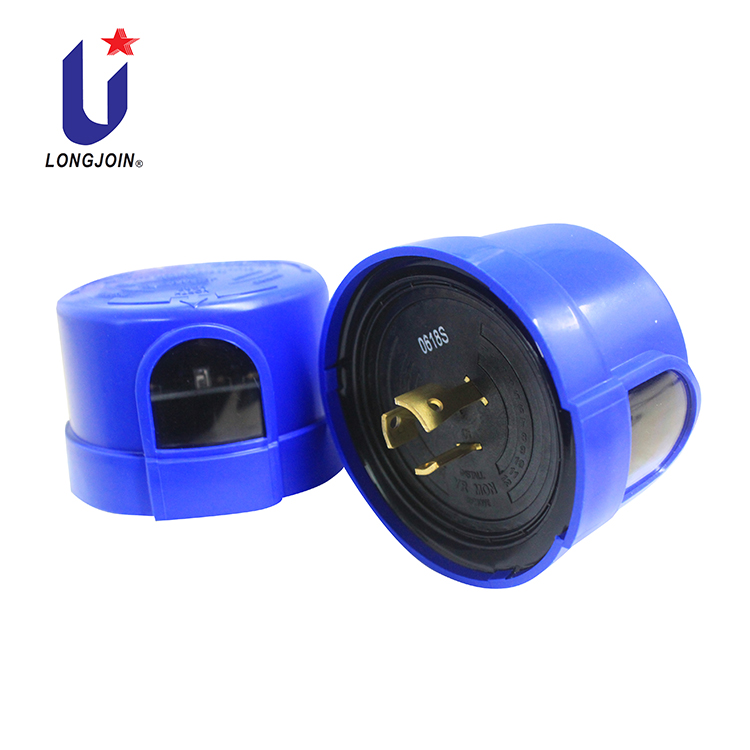
For customers already choosing JL-207 or JL-217 for flagship projects, UM models can fill the “value tier” in the same catalog, letting partners offer a full ladder from basic to advanced photocell for street light control.
What Pricing Strategies Help The UM Series Win In Different Market Types?
Once you know which UM models fit a region, the next question is simple: “How do we price them so they move?”
How Does Cost-Plus Pricing Keep You Competitive But Profitable?
For most emerging markets, a cost-plus model still works well. You add import costs, taxes, logistics, and a fair local margin. Then you round it to a clear, competitive unit price.
UM already costs less than many premium units. Cost-plus pricing helps you avoid undercutting yourself and still beat other non-specialist brands.
When Should You Use Feature-Based Or Value Pricing?
In Southeast Asia and in parts of South America, buyers now care about IP ratings and surge protection. They want gear that works with future smart controllers. Here you can price UM-240 or UM-208 slightly higher than simple caps, highlighting:
- IP protection and long life in humid climates
- Stable switching for LED drivers
- Easy integration with photocontrol receptacleand controller systems
How Does Competitive Pricing Protect Long-Term Market Share?
Street lighting is a long game. Once a city locks in a part number, they often keep it for 5–10 years. Regularly reviewing competitor pricing on outdoor photocell light sensor products lets you:
- Adjust prices slightly to stay in the “acceptable” band
- Avoid racing to the absolute bottom
- Use JL series and smart controllers as upsell paths instead of cutting UM margins every year
خاتمة
Outdoor and LED lighting are growing worldwide. New energy-saving rules and smart city projects push this growth forward. Cities want مصابيح الشوارع LED ذات الخلايا الضوئية that cut waste and run themselves. They must connect smoothly to controllers.
Dusk-to-dawn technology already helps cities reduce energy use and operating costs compared with fixed timers or manual switching. When utilities combine a reliable مستشعر ضوئي كهربائي with remote وحدة تحكم في إنارة الشوارع platforms, they can dim, monitor, and maintain assets with fewer field visits.
الروابط الخارجية:
●https://www.sciencedirect.com/topics/engineering/north-american-standard
●https://www.ul.com/services/certification
●https://en.wikipedia.org/wiki/Original_equipment_manufacturer

 Arabic
  English
  Russian
  Spanish
  Portuguese
  Japanese
  Italian