
The Photocell Revolution In The IoT Era: From Traditional Switches To Intelligent Networked Lighting Solutions
يقدم
For years, street lights relied on a simple idea. When daylight fades, the light turns on. When the sun comes back, the light turns off. That is the job of a traditional photocell switch. Products like Long-Join’s JL-205C و JL-207C do this well. They are stable, practical, and built for automatic dusk-to-dawn control.
But smart cities now want more than simple switching. They want lights that can report faults and share data. The lights should also follow schedules and connect to a larger control platform. That is why lighting control is moving into the Internet of Things, or إنترنت الأشياء. Long-Join’s newer smart controllers, such as the JL-245CN and JL-721NP, reflect that change by adding wireless communication, data reporting, and dimming support.
Why Are Traditional Photocells No Longer Enough?
A basic dusk to dawn photocell is still useful. It helps a lamp respond to natural light without daily manual work. Long-Join’s JL-205C is described as a controller that automatically manages street, garden, passage, and doorway lighting based on ambient natural light. The JL-207C series does the same and adds features like long life versions and wide-voltage options.
But there is one clear limit. These products are made to switch lights, not manage a network.
That means a city cannot easily use them to see live power data, track failures from a control room, or adjust brightness across zones. If one lamp fails, a worker may only know after complaints or field inspection. If a road needs lower brightness late at night, a basic light sensor switch cannot make that choice on its own. That is where smart IoT controllers change the story.
How Is Lighting Control Changing In The IoT Era?
Lighting control is moving from local switching to connected decision-making.
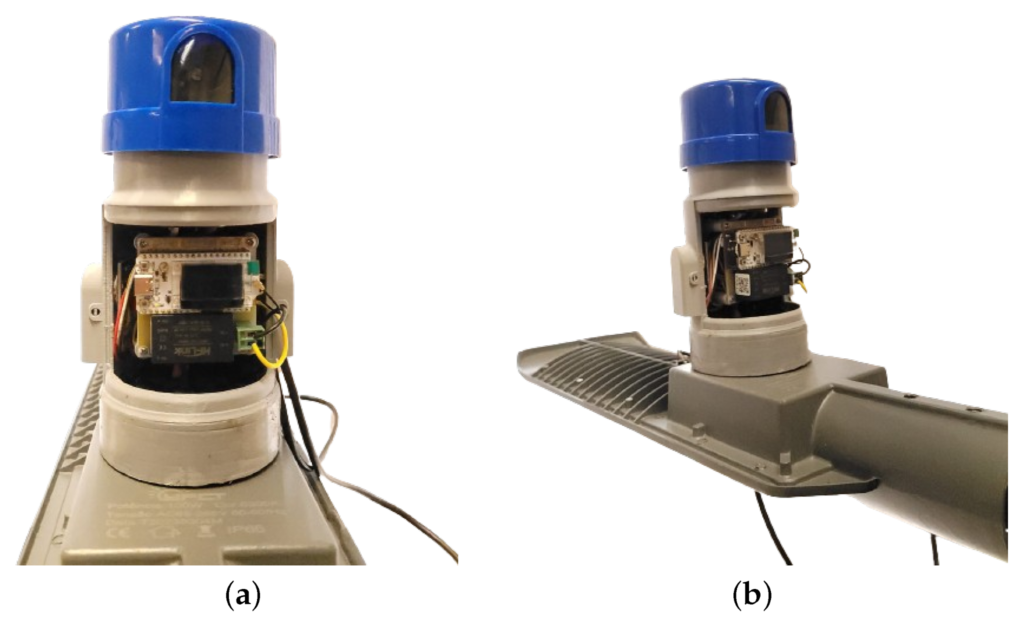
In the old model, one photocell sensor worked alone on one fixture. In the newer model, one controller becomes part of a wider system. It can send data, receive commands, and support remote settings. Long-Join’s JL-245CN uses NB-IoT wireless communication to upload data from each fixture and connect with a cloud-based terminal service. The JL-721NP combines إنترنت الأشياء ضيق النطاق, GPS positioning, and DALI 2.0 dimming, with remote server parameter control and time-control functions.
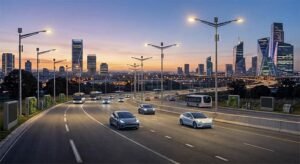
This is a big shift. The lamp is no longer just a lamp. It becomes a data point in a smart city network.
Traditional Vs. IoT Lighting Control
ميزة | الخلية الضوئية التقليدية | IoT Lighting Controller |
Main Job | On/off switching | On/off, dimming, monitoring, reporting |
Control Style | Local only | Local + remote |
Data Feedback | لا أحد | Real-time data upload |
Fault Alerts | Manual discovery | Remote alarm support |
Energy Strategy | Fixed response to daylight | Daylight + schedule + dimming logic |
Smart City Fit | محدود | Strong |
Which Communication Protocols Help Smart Street Lights Connect?
There is no single network for every project. That is why smart lighting products now support different wireless options.
Long-Join’s product range shows this clearly. The JL-245CN works on NB-IoT. The JL-245CZ uses Zigbee wireless communication. It also supports data upload and 0-10V dimming. Long-Join also talks about smart lighting systems that support communication options like Zigbee, LoRaWAN, and NB-IoT in connected street lighting. In simple terms, each protocol solves a different field problem.
NB-IoT is useful where wide-area carrier-backed communication is needed. Zigbee works well in shorter-range networked systems. لوراوان is a common choice when you need data to travel far and use very little power. The best option depends on the city. It also depends on lamp density, data load, and the current network plan.
Common IoT Protocols For Smart Lighting
بروتوكول | Best Known Strength | Good Fit |
إنترنت الأشياء ضيق النطاق | Wide coverage through telecom networks | Citywide remote lamp control |
زيجبي | Low power, mesh-style networking | Dense local lighting networks |
لوراوان | Long range, low data use | Large areas with light data traffic |
LTE/Cat 1 | Higher bandwidth than low-power networks | More data-heavy smart device needs |
What Smart Features Do IoT Lighting Controllers Add?
This is where the real upgrade happens.
A smart photocontrol can do far more than react to sunrise and sunset. Long-Join’s JL-245CN is positioned for remote real-time lamp monitoring and data transmission through NB-IoT.
ال JL-721NP adds DALI 2.0 dimming, GPS location support, local environment-based dimming, remote server control, and time-based strategy management. Long-Join’s smart photocell category also shows that these products are part of a broader connected control family.
That means an IoT photocell for street light can help with:
- voltage and current monitoring
- remote fault alarms
- dimming control
- schedule management
- cloud data upload
- better visibility of lamp status
These features help operators spend less time guessing and more time fixing real problems.
Is The Market For IoT Lighting Controllers Really Growing?
Yes, and the growth outlook is strong.
Market Research says the global smart street lighting market could reach US$3.6 billion in 2026. It may then grow to US$5.4 billion by 2033, with a CAGR of 6.1%.
Other reports show even faster growth in the wider connected public lighting market. The direction is still clear. Cities are spending more on connected lighting infrastructure, not less.
The reason is simple. Cities want to cut waste, reduce maintenance delays, and manage outdoor lighting with better data.
Regional Growth Pattern For Smart Street Lighting
منطقة | General Growth Pattern | Main Driver |
آسيا والمحيط الهادئ | Fastest growth | Urbanization and smart city rollout |
أمريكا الشمالية | Strong adoption | Energy rules and city modernization |
أوروبا | Policy-driven growth | Compliance and energy efficiency |
الشرق الأوسط | Government-led growth | New infrastructure and smart city builds |
South America | Gradual growth | Retrofit demand and power savings |
This regional pattern matches what the industry has been seeing across smart city and outdoor lighting upgrades.
Which Long-Join Smart Photocells Are Worth Watching?
Two models stand out in this transition.
The first is the JL-245CN. This is an NB-IoT wireless remote street light photocell controller rated for 120–277VAC. Long-Join says it supports wireless data transmission from each light fixture and connects reliably to a base station and cloud terminal service. That makes it a strong fit for projects that need remote status checks and centralized control.
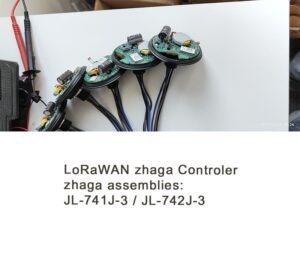
The second is the JL-721NP. This model uses a Zhaga interface and supports DALI 2.0 dimming. Long-Join says it includes NB-IoT, GPS-based location support, remote server control, time-control strategies, and local environment-based dimming modes. That makes it especially useful where smart integration and energy optimization matter.
If a project still needs a basic photocell lighting sensor, the JL-205C or JL-207C remains a practical choice. But if the goal is smart city control, these newer models show where the market is going.
Why Does This Shift Matter For The Future Of Street Lighting?
Because cities no longer want lights that only respond. They want lights that also inform.
A traditional photo control device helps save energy by turning lamps on only when needed. A smart controller goes further. It helps managers know what each lamp is doing, where the fault is, when dimming should start, and how the system performs over time.
That is the real revolution in the IoT era. The move is not from one switch to another. It is from isolated hardware to connected lighting intelligence. Long-Join’s product line, from the JL-205C and JL-207C to the JL-245CN and JL-721NP, makes that shift easy to see.
خاتمة
The old خلية ضوئية still has value. It is simple, proven, and dependable. But smart lighting needs more than basic on and off control now. It needs communication, visibility, and smarter energy use.
That is why IoT lighting controllers are becoming the next step. They help street lighting move from passive switching to active management, and that change is shaping the future of outdoor lighting.
الروابط الخارجية:
●https://en.wikipedia.org/wiki/Internet_of_things
●https://www.assured-systems.com/faq/what-are-iot-controllers/
●https://en.wikipedia.org/wiki/Narrowband_IoT
●https://www.dali-alliance.org/dali/keyfeatures.html
●https://www.thethingsnetwork.org/docs/lorawan/what-is-lorawan/
https://www.fondalighting.com/article/advantages-of-smart-street-light-system-smart-city-lighting-i00199i1.html#:~:text=Remarkable%20Energy%20Conservation%20and%20Cost,the%20whole%20life%2Dcycle%20cost



 Arabic
  English
  Russian
  Spanish
  Portuguese
  Japanese
  Italian