
Technical Analysis Of LONG-JOIN Waterproof Receptacle Micro-Design Optimization (2026 Edition)
يقدم
Outdoor lighting systems often fail for small reasons, not big ones. A weak seal, the wrong cable choice, or poor contact finish can shorten the life of a control system. That is why a waterproof مقبس التحكم الضوئي matters so much in low-voltage lighting control.
It is not just a connector. It is the point where power, signal, sealing, and long-term reliability meet. Long-Join’s NEMA receptacle pages show that these products are designed to link luminaires with twist-lock photocontrol and smart control interfaces, especially in ANSI C136.41-based lighting systems.
Why Does Cable Standardization Matter So Much?
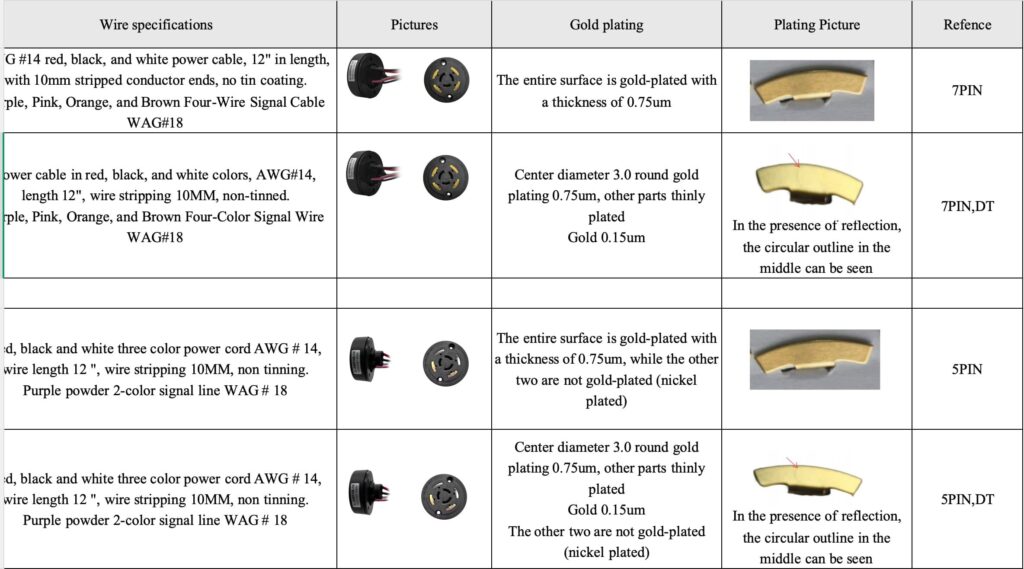
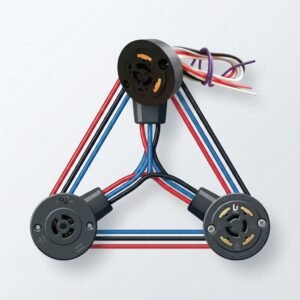
sizes do not match, installers get confused, voltage drop changes, and quality checks get harder. Sets a clear rule: AWG14 for power, AWG18 for signal, and a standard 12-inch length across four models. That kind of standardization helps keep production stable and makes field work easier.
Long-Join’s product pages support the general idea that wire gauge choices are part of the design logic. Its cable-type receptacle pages show common use of AWG14 and AWG18-class lead options, with customizable lengths and rear cable arrangements depending on the model.
Why Standardized Cable Design Helps
Design Point | Why It Matters In Real Use |
Same wire gauge across models | Makes assembly and training easier |
Standard cable length | Reduces layout mistakes during installation |
Clear wire color coding | Speeds up wiring checks and field repair |
Marked and certified cable sets | Supports better quality control |
How Does Wire Color Coding Make Installation Easier?
Color coding sounds like a small detail, but it solves a very common problem: wrong connection during installation. Main power lines in red, black, and white, plus signal lines in colors like purple, pink, orange, and brown. That setup helps separate power from low-voltage control at a glance.
This matters even more in smart systems. A مستشعر الخلية الضوئية or dimming controller may still power up even when one signal wire is wrong. That creates a frustrating problem: the lamp turns on, but dimming, reporting, or remote control fails. Long-Join’s 7-pin material also shows signal wiring for low-voltage functions such as 0–10V dimming and دالي-related control paths.
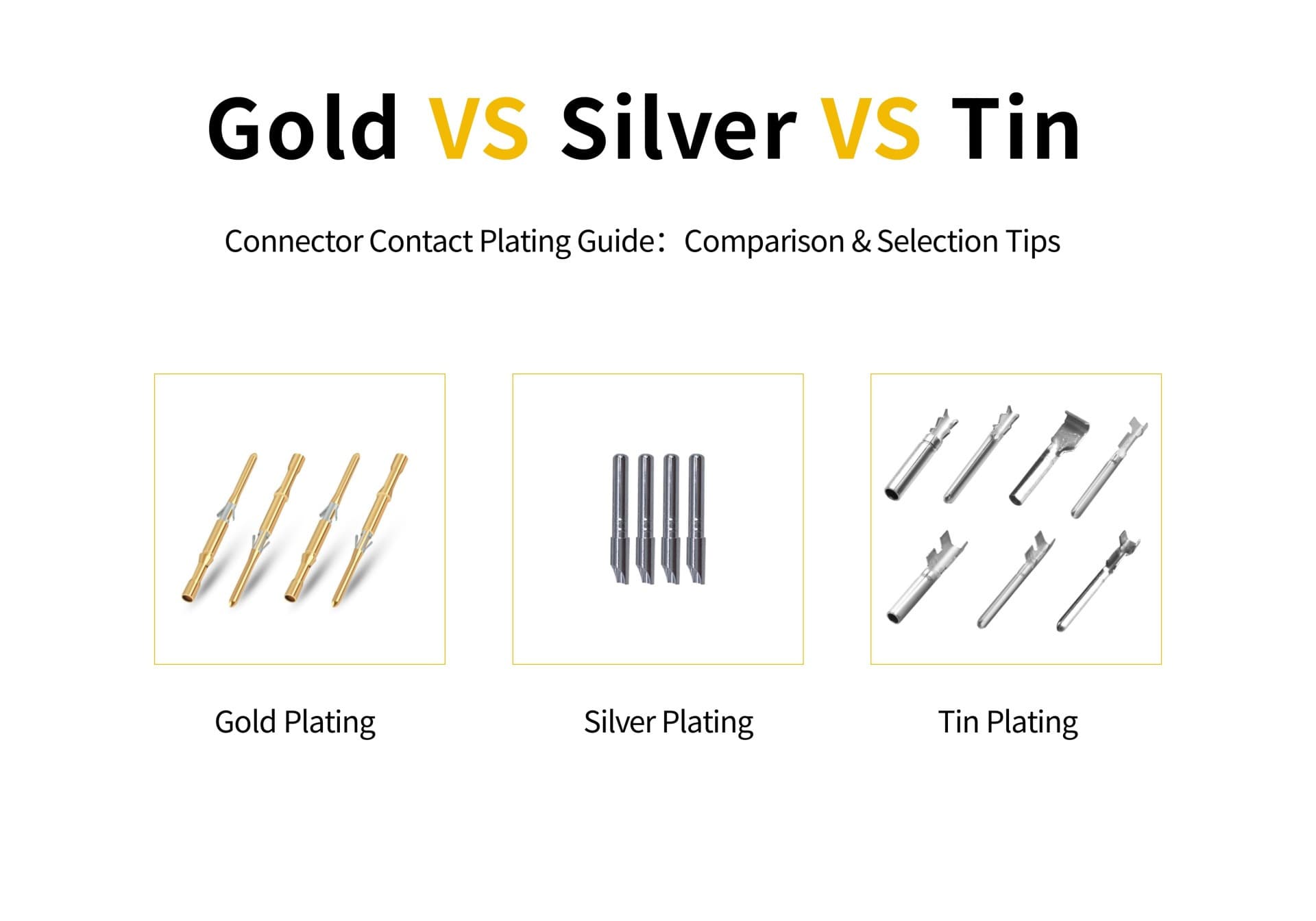
Why Compare Tin Plating And Gold Plating At All?
Because not every contact point does the same job.
Tin plating is often valued for basic corrosion resistance and practical solderability in many electrical parts. In a waterproof receptacle, tinned power-side elements can help improve contact stability and reduce surface damage in harsh outdoor use.
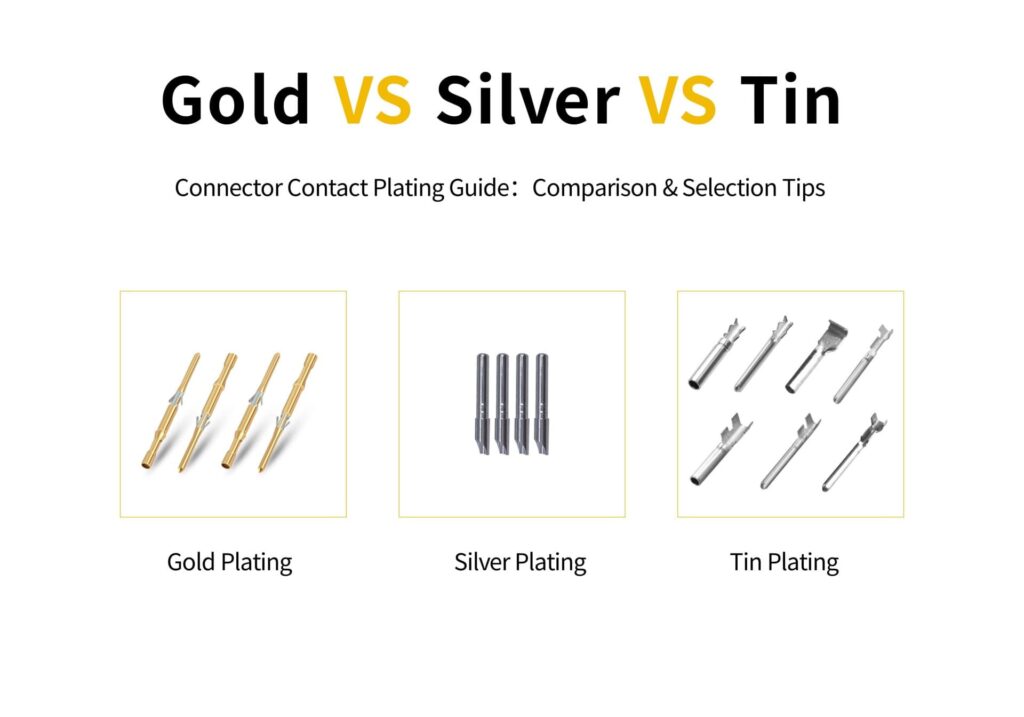
Gold plating, on the other hand, is usually used where signal quality and low-contact resistance matter more. Long-Join’s 7-pin receptacle pages specifically describe gold-plated low-voltage pads on the top surface for ANSI C136.41 spring-contact interfaces.
Tin Vs. Gold In Simple Terms
Plating Type | أفضل استخدام | Main Benefit | Main Limit |
Tin Plating | General power-side contact areas | Practical corrosion resistance and stable contact | Not ideal for every fine signal point |
Gold Plating | Low-voltage pads and key signal areas | Better conductivity stability and oxidation resistance | Higher cost |
Gold + Nickel Strategy | High-wear signal zones | Better wear resistance with controlled cost | More complex process |
Why Use Different Gold-Plating Thicknesses In Different Areas?
Because equal plating everywhere is not always the smartest use of material.
The part that gets touched the most, rubs the most, or carries the signal most often usually needs more protection. Use a 0.75 μm gold layer on the main center contact area, and a 0.15 μm layer on the other parts. The idea is simple. Add more gold where wear is highest. Use less where wear is low.
What Do The JL-240FXA And JL-240FXB Series Show About Design Thinking?
They show that waterproof receptacles are not all built the same just because they look similar.
Public Long-Join pages clearly show the JL-240FXA as an enhanced waterproof receptacle family with IP66 positioning, ANSI C136.41 compliance, and UV-stabilized PBT material. The broader نيما category pages also show that Long-Join offers several related receptacle lines, including cable-type and multi-pin versions, which suggests a design approach based on application matching rather than one fixed build for all environments.
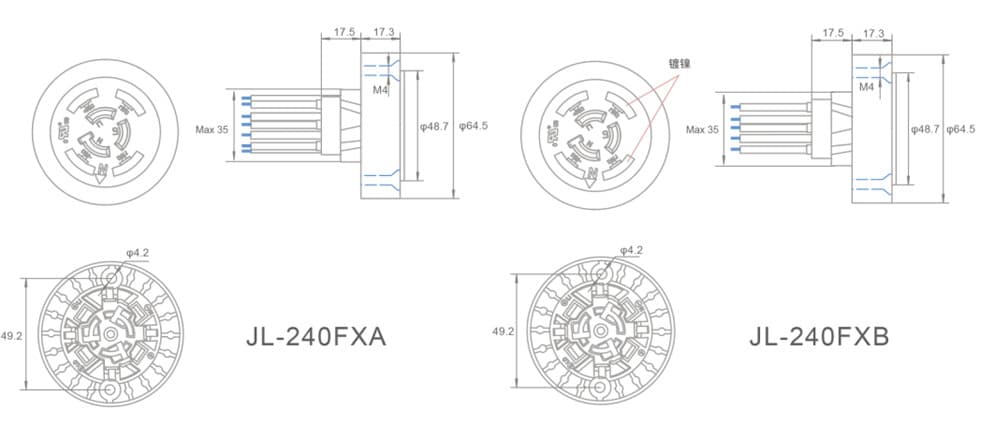
The FXA and DT types differ in how the gold plating is designed. The FXB series goes a step further. It uses selective gold plating and local nickel plating. That range makes sense. Different markets and fixtures need their own balance of cost, strength, and weather resistance. A place with mild weather does not need the same finish as a fixture used in a wet, salty, or shaky area.
Model-Level Design Logic
Model Focus | Main Design Goal | Likely Benefit |
JL-240FXA Series | Enhanced waterproof structure | Better sealing and outdoor reliability |
DT Variants | Refined contact-area treatment | Better match for specific use conditions |
JL-240FXB Series | Selective gold and nickel use | Balance between durability and cost |
How Do Micro-Design Changes Improve Waterproofing And Service Life?
They reduce weak points before failure starts.
A waterproof receptacle does not fail only because rain gets in. It can also fail because oxidation builds up on contacts, cables degrade, or sealing parts lose stability over time. That is why micro-design matters. Better plating helps contact surfaces resist wear and oxidation.
Better cable control helps reduce wiring errors and stress. Better material consistency helps the seal stay tight longer.
In simple terms, small design fixes stop big field problems. That is good for the whole photocell control system, whether the product is used in a photocell street light, a smart NEMA socket setup, or a more advanced 7-pin receptacle installation.
Frequently Asked Questions
Tinned cables resist surface rust better, especially in wet outdoor areas. Non-tinned versions can still work well. But they need better sealing and tighter control of the environment.
Because the parts that wear out fastest need more protection. Thicker plating makes key areas last longer. Thinner plating in low-stress areas helps cut cost.
It helps technicians identify power and signal lines faster. That cuts repair time and reduces wrong reconnection.
Yes. In general, better-protected contact areas hold up better over repeated use and are less likely to lose performance through oxidation.
They improve sealing, reduce contact wear, lower failure risk, and help the whole photocell system last longer.
خاتمة
The real strength of a waterproof receptacle is often hidden in the small details. Standard cable specs, smart color coding, selective tin and gold plating, and careful model-by-model tuning all help build a more reliable product. For outdoor التحكم الضوئي systems, these details are not cosmetic. They are part of what keeps the light working when heat, rain, dirt, and time start putting pressure on the system.
الروابط الخارجية:
●https://www.nema.org/membership/products/view/lighting-systems
●https://www.auroramaterialsolutions.com/materials/pc-pbt/
●https://webstore.ansi.org/standards/nema/ansic136412013?srsltid=AfmBOoqLHkgl0pHxK3Eg2P2POT7_QwiRypNJOznO9HpZa_S9jxlti80r
●https://www.nvcuk.com/technical-support/view/what-is-dali-8
●https://en.wikipedia.org/wiki/American_wire_gauge
●https://www.auroramaterialsolutions.com/materials/pc-pbt/

 Arabic
  English
  Russian
  Spanish
  Portuguese
  Japanese
  Italian