
Evolution Of International Photocell Standards: Comparative Analysis Of NEMA, Zhaga, And Hybrid Standards With Long-Join’s Zhaga-D4i Products
يقدم
Outdoor lighting is changing fast. A few years ago, many projects only needed a basic photocell that could turn a lamp on at dusk and off at dawn. Now, cities want much more. They want dimming, remote checks, energy data, and easier upgrades. That shift is one big reason international standards matter so much in modern إنارة الشوارع الخارجية projects.
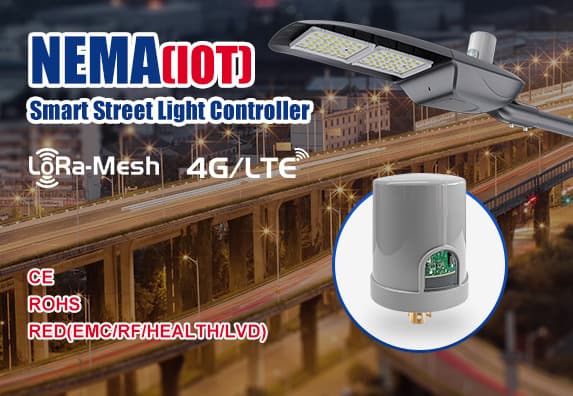
In this shift, three paths stand out. نيما remains strong in many traditional road lighting jobs, especially where proven mechanical fit and simple control still matter. كتاب زاغا 18 and Zhaga-D4i push the market toward modular smart lighting.
Hybrid solutions try to bridge old and new by mixing familiar field compatibility with newer control needs. Long-Join’s product pages show that the company now covers both NEMA and Zhaga product lines, including Zhaga Book 18 interfaces and Zhaga-D4i related products.
What Does Traditional NEMA Do Well?
NEMA Strength | What It Means In Simple Words | أفضل استخدام |
Mature mechanical fit | Easy to mount and replace in the field | Standard road lighting |
Wide market familiarity | Many teams already know how to use it | Utility maintenance work |
Good for basic control | Works well for on/off and simple switching | تقليدي خلية ضوئية لإضاءة الشوارع setups |
Stable installed base | Fits many existing fixtures and projects | Retrofit jobs that do not need deep smart functions |
What Makes Zhaga Book 18 And D4i So Important Today?
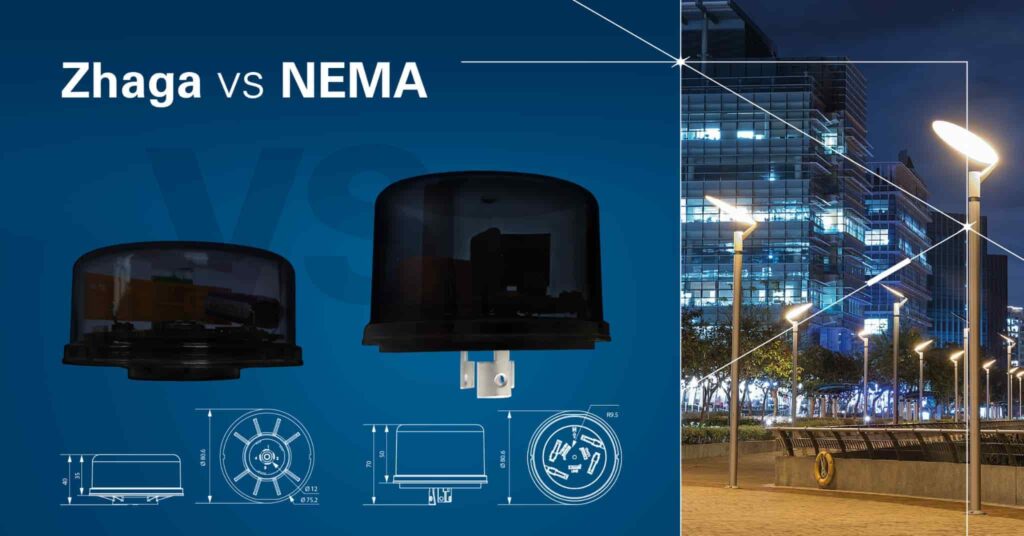
Zhaga Book 18 matters because it was built for smart outdoor lighting from the start. The اتحاد زاغا says Book 18 defines a smart interface between outdoor luminaires and sensing or communication modules. This includes power and communication aspects, so certified parts from different suppliers can work together. That kind of shared interface makes upgrades easier and reduces lock-in.
D4i adds another important layer. The DALI Alliance describes Zhaga-D4i as a joint certification program between Zhaga and the DALI Alliance. It combines the Zhaga physical interface with standardized D4i communication. In plain language, that means the socket and the data side are both built to work in a smarter, more organized way.
For buyers, this matters because a مقبس زاغا is not just a connector. It is part of a future-ready lighting control system. It helps a light become easier to monitor, easier to upgrade, and easier to manage.
How Does Zhaga-D4i Expand Smart Lighting Beyond Basic Switching?
Zhaga-D4i goes beyond simple dusk-to-dawn switching because it supports modular communication and smart data exchange. The Zhaga material says Book 18 covers sensing and communication modules, while D4i adds a standardized communication layer used in connected lighting systems.
That opens the door to features many cities now want. A control node can help with dimming, remote status checks, energy reporting, and easier maintenance planning. Long-Join’s wireless controller service page shows that its intelligent lighting systems can collect data such as voltage, current, power, energy use, light intensity, and fault information, while also supporting remote control functions.
So if NEMA helped the market build dependable outdoor control, Zhaga-D4i is helping the market build smarter networks.
How Are NEMA And Zhaga-D4i Different?
Standard Type | الواجهة الميكانيكية | Communication Support | Smart Function Coverage | الاستخدام النموذجي |
نيما | Strong and familiar | Low to moderate, depending on system design | Limited in basic setups | Traditional road lighting |
زاغا-D4i | Standardized modular interface | Strong, with standardized smart communication | High, with smart nodes and data support | Smart city and connected lighting |
Hybrid | Tries to combine both worlds | Moderate to high | Useful for mixed upgrade paths | Retrofit and transition projects |
What Is A Hybrid Standard, And Why Are More Projects Talking About It?
A hybrid standard is really a practical answer to a real market problem. Many cities already have lighting infrastructure built around NEMA habits and hardware. At the same time, they want smarter systems that look more like Zhaga-D4i. Hybrid thinking tries to connect those two worlds instead of forcing a full jump all at once.
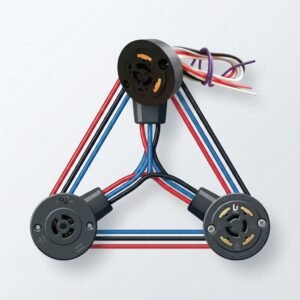
Long-Join’s own content reflects this bridge idea. One page explains that if a project used مقابس NEMA ذات السبعة أطراف before but now wants to modernize with a Zhaga-based luminaire, a Zhaga-related socket option can make that path easier and reduce redesign pressure. That is exactly why hybrid solutions matter. They help protect older investments while supporting newer smart systems.
In simple words, hybrid standards are not about choosing the past or the future. They are about making upgrades less painful.
Which Long-Join Zhaga-D4i Products Fit This Trend Best?
Long-Join’s Zhaga series page lists Zhaga-D4i certified standard products including JL-721A1, JL-721A2, and JL-721A3. Its JL-721A product page says the JL-721A1 and JL-721A2 series use DALI 2.0 dimming output, carry CE and RoHS marks, comply with Zhaga Book 18, and use an optic sensor design.
That makes the JL-721A1 a clear example of where the market is going. It connects the photocell sensor idea people already understand with a more modern Zhaga-D4i style path. It is still a control product, but it belongs to a smarter control world.
Long-Join’s broader Zhaga product pages also show JL-722-series products in its smart sensor family, including DALI-based versions and products that combine sensor functions with newer control methods. I could confirm the JL-722 family’s presence in Long-Join’s Zhaga range, but I could not independently verify every detailed feature listed in your outline for JL-722A3 from a dedicated product page.
Which Long-Join Products Show The Upgrade Path?
Product / Family | Verified From Official Pages | لماذا هذا مهم |
JL-721A1 | DALI 2.0, Zhaga Book 18 compliant, optic sensor, CE, RoHS | Good example of a smart التحكم الضوئي product for modern outdoor lighting |
JL-721A Series | Listed by Long-Join as Zhaga-D4i certified standard products | Shows Long-Join’s move into smart standard-based products |
JL-722 Series | Present in Long-Join’s Zhaga sensor range and related content | Supports the wider smart sensor and dimming product direction |
خاتمة
International photocell standards are no longer just technical rules on paper. They now shape how outdoor lighting is built, upgraded, and managed. NEMA still matters because it is proven and practical. Zhaga-D4i matters because it supports smarter, modular, and more connected lighting. Hybrid solutions matter because many real-world projects need both stability and progress.
الروابط الخارجية:
●https://www.nema.org/membership/products/view/lighting-systems
●https://www.zhagastandard.org/books/overview/smart-interface-between-outdoor-luminaires-and-sensing-communication-modules-18.html
●https://en.wikipedia.org/wiki/NEMA_connector
●https://www.zhagastandard.org/index.php?option=com_content&view=article&id=340:zhaga-enables-iot-upgradeable-outdoor-led-lighting-fixtures&catid=22

 Arabic
  English
  Russian
  Spanish
  Portuguese
  Japanese
  Italian