

How To Maintain Stability Of Photocells In 60°C High-Temperature Environments And Which Type To Choose
يقدم
A photocell looks tiny, but it’s doing serious work. Tells the light when to turn on. When to turn off. Easy job in normal weather. But in 60°C heat? Different story.
High heat messes with everything inside. Sensor drifts. Relay gets tired. Plastic shell ages. Sealing fails. Put the wrong photocell in a hot environment and the light turns on too early, stays on too late, or dies completely. This isn’t about price. It’s about materials, temperature range, relay quality, and sealing.
الانضمام الطويل makes models like JL-207C و JL-103A for outdoor and industrial work. JL-207 series handles automatic street lighting, landscape lighting, corridor lighting, doorway lighting. JL-103A is a button type for road lights, yard lights, parking lots, warehouse lights, public areas.
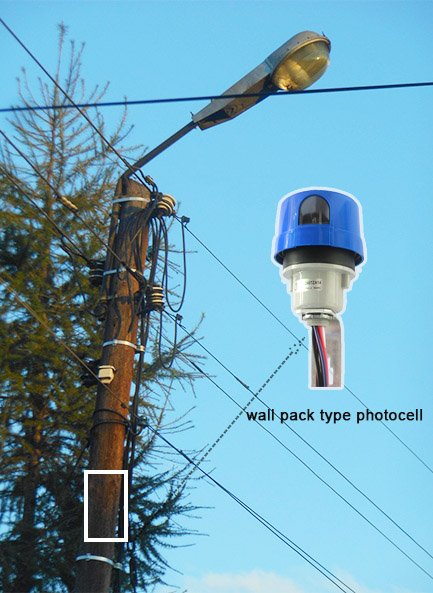
Why Do Photocells Actually Become Unstable In 60°C Heat?
Heat makes everything inside stop working right. The light sensor drifts. Reads the light level wrong. Lamp switches at the wrong time. Maybe too early, maybe too late.
The relay suffers too. Heat makes metal expand. After weeks of 60°C days and cooler nights, relay contacts get weak. Stop closing properly. Light flickers. Or fails completely.
Control circuits inside also get affected. The circuit decides when the lamp turns on and off. Heat messes with that decision. Timing becomes less accurate. Maybe way less accurate.
The outside shell matters just as much. Sun. UV rays. Rain. Heat. All of it attacks the housing. Shell gets brittle. Seal comes loose. Water enters. Once water reaches the circuit? Game over. Photocell stops working.
Heat Problem | What Happens | What To Check Before You Buy |
Sensor drift | Wrong on/off times | Stable photoelectric sensor design |
Relay fatigue | Flickering or contact failure | Silver alloy relay contacts |
MCU or circuit drift | Poor control logic | Heat-rated electronic parts |
Housing aging | Cracks and weak sealing | UV-resistant PC or PP housing |
Moisture enters | Circuit gets destroyed | Strong sealing and welding design |
One degree hotter and everything accelerates. Two degrees hotter and things fail fast.
How Does The JL-207C Actually Help In Harsh Outdoor Areas?
JL-207C is built for tough jobs. High heat. Rain. Dust. Long hours of use. It’s a twist-lock design, so crews can remove and replace it without opening the whole lamp. That matters when maintenance time costs money.
Long-Join describes JL-207 as a dusk-to-dawn energy-saving controller for street lighting and outdoor areas. They mention the long-life version maintains reliable performance and that the double-layer protective shell gives it longer lifespan.
For high-temperature work, the key isn’t just switching. It’s the entire structure holding together. Strong shell. Stable relay. Reliable sensing. Everything working as one system. If one part fails, the whole light control fails.
Twist-lock design means easier replacement. That’s important in remote areas where you need quick maintenance. Road lighting crews know this. One bad photocell shouldn’t require ripping apart the fixture.
How Does The JL-103A Fit Smaller Lighting Fixtures?
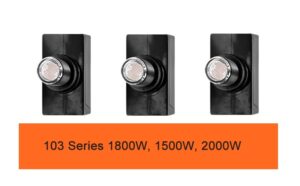
JL-103A is a button type. Compact. Simple. Used when there’s not much space in the fixture. Yard lights. Wall packs. Garden lights. Passage lighting. Small outdoor fixtures.
Long-Join says it controls lighting automatically based on ambient light levels. Works in landscape lights, garden spotlights, LED floods, wall packs, barn lights.
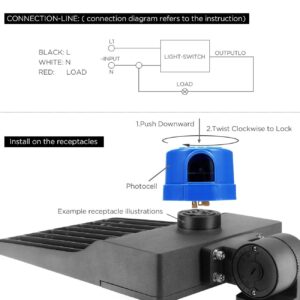
This type works when a twist-lock won’t fit. Can mount inside or on the fixture body depending on the lamp design. For 60°C areas, focus on sealing, wire quality, shell strength, and the actual working temperature range.
JL-103A isn’t the biggest option. But it’s practical for compact fittings. It’s described as a classic and economical choice for 120V projects.
Which Design Features Actually Keep A Photocell Stable In High Heat?
It’s not one feature. It’s several working together.
First, housing needs heat and مقاومة الأشعة فوق البنفسجية. PC and PP materials are common, but they need to be weather-resistant. Weak plastic ages fast under strong sun.
Second, sensor needs low drift. Shouldn’t get “confused” when temperature rises. Light should still control switching, not heat stress.
Third, relay contacts need to be strong. Silver alloy contacts work because they maintain stable electrical contact under load and heat.
Fourth, sealing is critical. Strong housing doesn’t help if water enters through the mounting hole or wire gap. Long-Join’s installation guide mentions JL-103A and JL-403C use a threaded nipple, gasket, and nut. They recommend sealing compound on curved or uneven surfaces.
Design Feature | Why It Matters In 60°C Heat |
Double-layer enclosure | Better protection from sun, heat, aging |
UV-stabilized shell | Slows down cracking and fading |
Stable sensor element | Reduces wrong light readings |
Silver alloy relay contacts | Reduces weak contact and switching failure |
Better sealing | Keeps moisture away from circuits |
Optional thermal compensation | Reduces temperature-related drift |
A double-layer shell sounds simple. It’s actually the difference between equipment that lasts and equipment that fails.
Which Is Better For Extreme Heat: JL-207C Or JL-103A?
JL-207C is the stronger choice for extreme outdoor and high-temperature projects. Especially where the fixture supports twist-lock. Road lighting. Industrial zones. Desert areas. Large outdoor systems.
JL-103A is better when you need compact button control. Smaller lamps. Wall packs. Passage lights. Simple projects. Works fine when the environment’s controlled and the fixture is properly sealed.
Decision’s simple. Heavy-duty and exposed? Choose JL-207C. Compact and cost-sensitive? Choose JL-103A. But seal it properly.
نموذج | أفضل استخدام | Main Strength | Better For |
JL-207C | Street lights, industrial, harsh outdoor | Twist-lock design, strong outdoor use, long-life option | High heat, wide exposure |
JL-103A | Yard lights, wall packs, garden lights | Compact size, simple dusk-to-dawn control | Smaller fixtures, simple projects |
JL-207C With Strong Housing | Road and desert lighting | Better protection under sun and heat | Extreme temperature areas |
JL-103A With Good Sealing | Small outdoor fixtures | Easy mounting and low space demand | Compact lamps in warm locations |
In 60°C heat, JL-207C is the safer bet. Not just for performance, but for reliability over years.
How Can Buyers Actually Check If A Photocell Is Safe For 60°C Use?
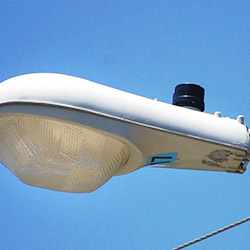
Start with operating temperature range. Don’t assume every photocell works in hot sites. A photocell that handles normal outdoor weather might fail in a metal lamp body under strong sun.
Check the housing material. Look for UV resistance, weather resistance, strong sealing. Check the relay and load rating. A photocell that handles the load poorly fails fast.
Ask where it will be installed. Open road heat is different from factory wall heat. Desert site is different from shaded garden. Same product behaves differently in each place.
For smart lighting projects, think ahead. Do you need only on/off now? Or will you need remote control, smart monitoring, automatic controllers later? Pick a design that leaves room for upgrades.
Temperature matters. But so does installation location and future needs.
الأسئلة الشائعة
Check the temperature range. Check housing material. Check sealing method. Check relay quality. Don't trust appearance.
They maintain stable electrical contact under heat and load. Reduces weak switching and failure.
Helps the photocell adjust against heat-related drift. Light reading stays more stable across temperature swings.
Protects the sensor and circuit. If it cracks or leaks, moisture and dust destroy everything inside.
JL-207C for harsh outdoor and high-temperature jobs. JL-103A for compact fixtures where environment's controlled.
خاتمة
أ خلية ضوئية in 60°C doesn’t just switch a lamp. It resists heat. UV. Moisture. Daily temperature swings. That’s why the right model and right installation both matter.
Choose JL-207C when the project needs strong outdoor performance and easier maintenance. Choose JL-103A when you need compact button control. In both cases, check temperature rating, housing material, sealing quality, relay design before buying.
Get this right and the light works for years. Get it wrong and you’re replacing it in months.
الروابط الخارجية:
●https://www.baudcom.com.cn/blog/abs-vs-pp-vs-pc-which-is-better-for-fiber-terminal-box
●https://www.ulprospector.com/knowledge/media/2017/03/RTP-Co_UV-Resistance-for-Plastics-Webinar_04132017.pdf


 Arabic
  English
  Russian
  Spanish
  Portuguese
  Japanese
  Italian