

Will Photocell Lamps Stay Always On Due to Relay Sticking?
導入
One common cause of a light with a functioning photocell staying on through the day is failure of the photocell’s relay to open.
Relay sticking refers to where the switching contacts weld together or mechanically bind in the closed position, and it is one of the most common photocell failure modes. This fixed closure causes the light to run continuously regardless of ambient light conditions.
Understanding why relay sticking occurs and how Long-Join’s design prevents it determines whether this failure mode appears in the first year of service or not at all.
What Role Does the Relay Play and What Happens When It Sticks?
その relay is the main switching device of a photocell circuit; it opens and closes the circuit that is used to power the lamp. If the relay contacts stick, the circuit will never open, and the lamp will be continually energized.
The most obvious symptom of a failed photocell is relay sticking; light on in broad daylight. Stuck relay failure immediately appears and is the most noticeable and complained-about failure mode of any photocell failure mode as opposed to sensing failure, which results in subtle timing errors or flickering.
The effects on the visible symptoms are not the only effects. Running a lamp around the clock rather than 12 hours cuts its rated operating life in half and requires twice the energy. This is a major accelerated aging factor for LED drivers rated for an hour-based service life.
What Are Long-Join's Technical Advantages for Preventing Relay Sticking?
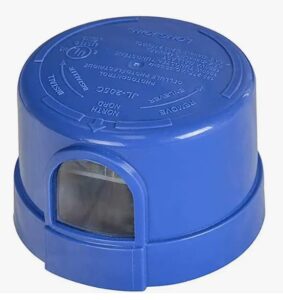
Four design decisions in Long-Join photocells directly address the failure mechanisms that produce relay sticking.
Technical Aspect | 説明 |
Industrial-grade Relay | Uses high-quality industrial-grade materials to enhance wear resistance and electrical performance, significantly reducing sticking occurrences |
Modular Optimised Design | Optimises relay drive and mechanical structures to mitigate impacts and arcs, extending relay service life |
Precise Light Sensing and Control Strategy | Reduces relay frequent switching cycles, avoiding false triggers from vibration or abnormal power off |
Rigorous Quality and Life Testing | Conducts intensive lifespan and electrical compatibility tests, ensuring stability and safety across complex environments |
What Are the Common Causes of Relay Sticking and Their Solutions?
Four causes account for the majority of relay sticking failures, each with a specific engineering countermeasure.
原因 | 解決 |
Electrical overload and arcing | Use a high-quality relay suitable for rated loads with overload protection |
Mechanical vibration fatigue | Adopt vibration-proof structural design to improve mechanical stability |
Improper material selection | Use wear- and corrosion-resistant materials for relay contacts |
Frequent relay switching | Adjust photocell logic control to prolong relay closing and opening intervals |
Electrical overload is the most common cause of arc welding. When the connected load exceeds the relay’s rated capacity, the current through the contacts at each switching event is higher than the contact material is designed to handle. The resulting arc discharge is more intense and deposits more contact material transfer on each operation. Over time, this builds up a bridge between the open contacts or welds the surfaces together. Specifying a photocell whose relay rating comfortably exceeds the connected load provides meaningful protection against this failure path.
Frequent false triggering is the compounding factor. A photocell that switches correctly twice per day (dusk and dawn) accumulates switching stress slowly. One that false-triggers dozens of times per night from boundary light or reflective interference accumulates the same stress in weeks. This is why sensing accuracy and false trigger prevention are not just performance specifications; they directly affect relay service life.
What Steps Should Be Taken If Lamps Remain Constantly On?
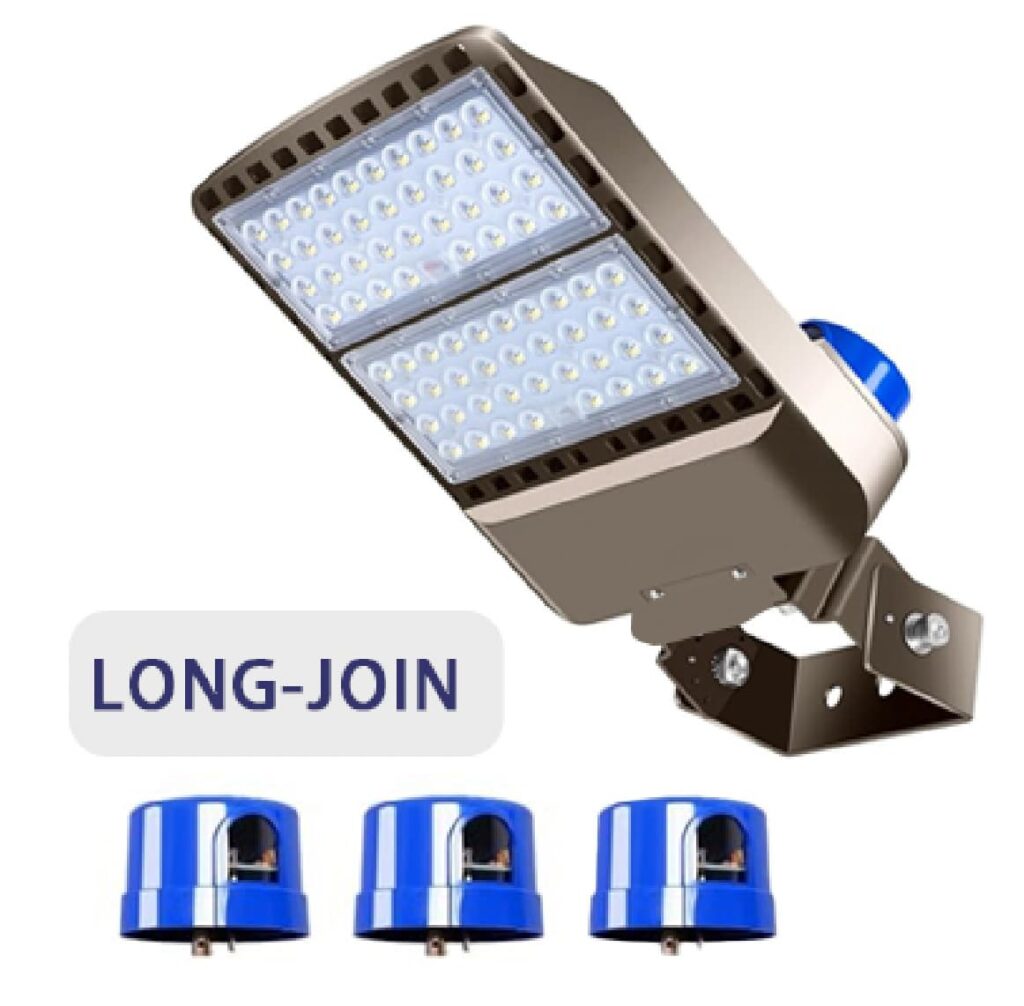
If a lamp is on during daylight hours even with the presence of a photocell, the diagnosis sequence is very simple. Make sure to perform the cover test (doing the cover test for 30-60 seconds). If the lamp turns off when covered and back on when uncovered, then the sensing circuit is operating, and the problem is a threshold or orientation problem and not one of sticking relays. In the event that the lamp will stay on whether or not the detector is covered, the relay is probably stuck closed, and the photocell unit should be replaced.
のために twist-lock photocells, replacement takes under a minute without rewiring. For wire-in units, the circuit must be isolated before replacement. In both cases, the replacement unit should be checked against the connected load rating and installation conditions that caused the original failure before reinstallation.
Full specifications for Long-Join’s photocell range, including relay cycle ratings, are available on the product page.
Frequently Asked Questions on Relay Sticking
The lamp remains permanently on regardless of ambient light, doubling energy consumption and accelerating LED driver aging by running the driver twice the intended hours per day.
Long-Join uses industrial-grade relay specifications with silver alloy contact materials rated for higher arc erosion resistance, combined with spring mechanisms designed for the thermal range and vibration levels of outdoor photocell installation.
Perform the cover test: cover the sensor and observe whether the lamp switches off. If it does not switch off when covered, the relay is stuck in the closed position and replacement is required.
Isolate power, replace the photocell unit with a correctly rated replacement, and verify the connected load does not exceed the new unit's relay rating. For twist-lock units, the swap requires no tools and takes under one minute at the fixture.
Through industrial-grade contact materials, zero-crossing switching that eliminates arc discharge at each switching event, sensing accuracy that reduces unnecessary switching cycles, and vibration-resistant mechanical design that maintains spring tension across outdoor service conditions.
結論
Relay sticking produces the most visible and economically damaging photocell failure mode. Four causes account for most sticking failures:
- Electrical overload
- Vibration fatigue
- Improper contact materials
- Frequent false triggering.
Long-Join addresses all four through industrial-grade relay selection, zero-crossing switching, IR-CUT filtering that reduces false triggers, and vibration-resistant mechanical design. The cover test provides immediate field diagnosis, and the twist-lock format makes replacement fast when it is needed.
外部リンク
1.https://en.wikipedia.org/wiki/Relay
2.https://en.wikipedia.org/wiki/Electric_arc




 Japanese
  English
  Russian
  Spanish
  Portuguese
  Arabic
  Italian